Inflammation : The Longevity Metric Hiding Inside All the Others
Aug 25, 2026
Part of the Longevity Metrics Series: Auditing My Health as I Turn 55
I deliberately saved inflammation for the final metric in my 55th Birthday Longevity Audit because it shows how beautifully and intricately interwoven all our systems are.
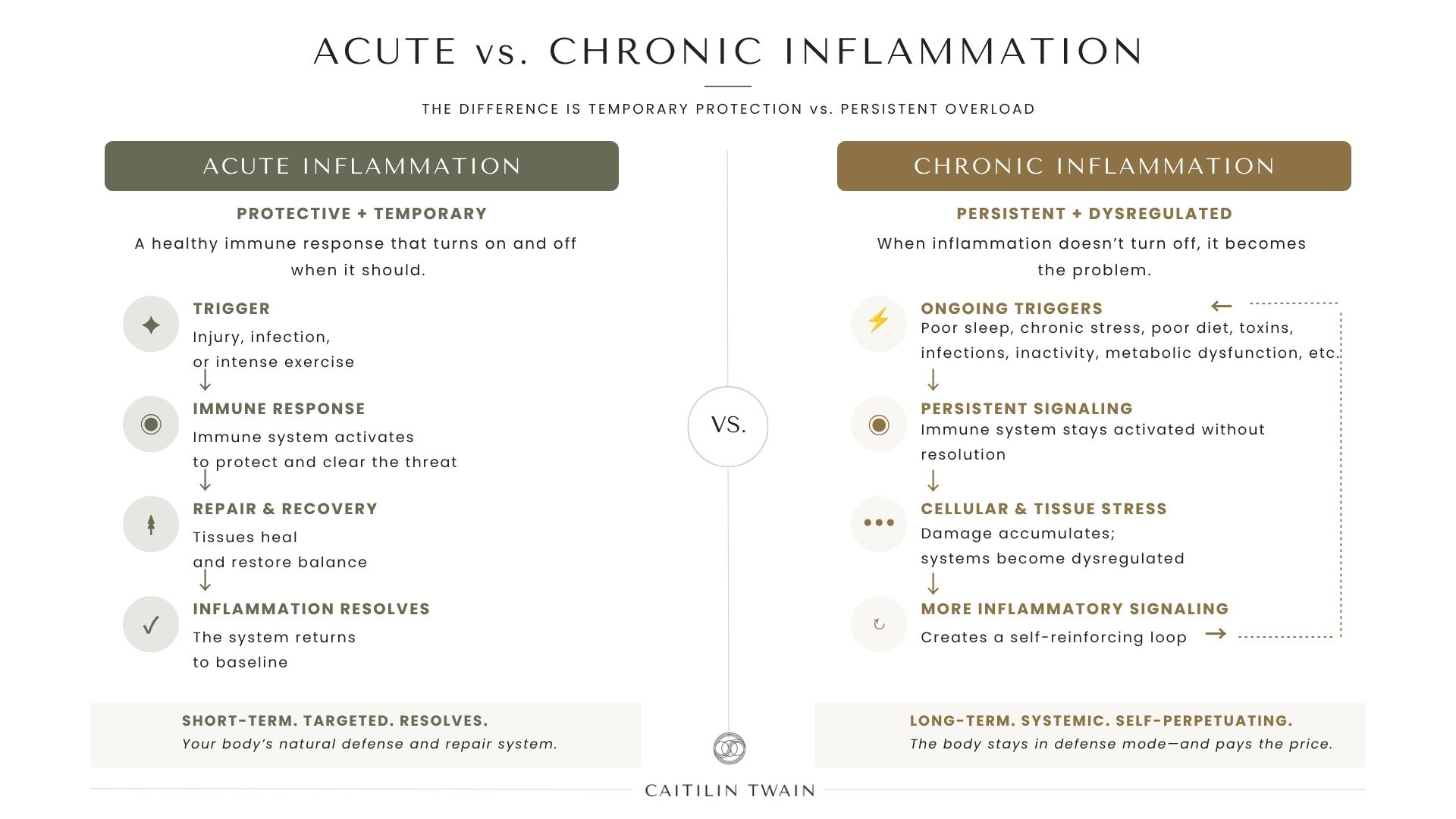
Let’s start with an important message: Inflammation has gotten a bad rap. Social media is flooded with messages about how we need to fight it, lower it and eliminate it, when in fact inflammation is essential to keeping us alive.
We couldn’t survive without inflammation.
Inflammation is part of the body’s normal defense and repair system. Cut your finger, catch a virus, strain a muscle or challenge your body with a hard workout, and your immune system mounts an inflammatory response. That response helps fight infection, clear damaged cells and begin repair.
The problem begins when inflammation doesn’t know when to turn off.
As we age, many of us develop a persistent background level of low-grade systemic inflammation, even in the absence of an obvious infection or injury.
Researchers call this inflammaging.
What Is Inflammaging?
Chronic inflammation is now recognized as one of the hallmarks of aging, the interconnected biological processes that drive the progressive decline we associate with getting older.
Persistent systemic inflammation is associated with cardiovascular disease, type 2 diabetes, neurodegenerative disease, cancer, chronic kidney disease, frailty and loss of physical function.
Aging itself can also create conditions that promote inflammation:
- Senescent, aka “zombie,” cells accumulate.
- Mitochondrial function - our cellular energy production - changes.
- Cellular debris increases.
- Immune function shifts.
- The gut microbiome and intestinal barrier can change.
These changes can provoke inflammatory signaling, which can contribute to further cellular dysfunction and tissue damage.
A self-reinforcing loop can develop. That makes inflammation a particularly useful lens through which to understand aging.
It isn’t simply one more risk factor sitting beside all the others. It’s one of the threads connecting them.
Why I Saved Inflammation for Last: Ten Metrics. One Body.
I designed this Birthday Audit in a deliberate order because I wanted each metric to build on the one before it.
Grip Strength
We started with grip strength, a surprisingly powerful window into muscle, neuromuscular function and future independence.
But muscle is much more than the machinery that moves us. It is metabolically active tissue and a major site of glucose disposal. Maintaining muscle helps support insulin sensitivity and metabolic health, which connects it directly to several of the metrics that followed.
Sleep
Then came sleep, because recovery influences almost everything that follows.
Sleep affects glucose regulation, appetite, cardiovascular health, nervous-system function and immune regulation. Sleep disturbance has also been associated with increases in inflammatory markers including CRP and IL-6. This is one of the clearest examples of why we can't isolate one longevity metric from another.
VO₂ Max + Heart Rate Variability
VO₂ max gave us a measure of cardiorespiratory capacity, while heart rate variability brought in nervous-system regulation and recovery.
Regular physical activity improves cardiovascular fitness and metabolic health while also being associated with lower levels of chronic systemic inflammatory markers.
HRV gives us another window into the picture. It reflects, among other influences, autonomic nervous-system regulation and our capacity to adapt and recover from stress. And that nervous system is in constant conversation with the immune system.
Chronic psychological stress has been associated with higher levels of systemic inflammation, while research has found that higher HRV is generally associated with lower levels of inflammatory markers .
In other words, our ability to recover from stress may be connected not only to how we feel, but to what is happening at the level of the immune system.
Lipids
My Lipid panel opened the cardiovascular-risk conversation.
But cardiovascular disease isn't simply a cholesterol story. Inflammation is involved in the development and progression of atherosclerosis, which is one reason hs-CRP can add useful information when assessing cardiovascular risk.
Again, the numbers don't exist in separate lanes.
Body Composition
Body composition showed why muscle and visceral fat matter far beyond appearance.
Visceral fat is not simply stored energy. It’s biologically active tissue that produces and releases signaling molecules involved in inflammation, and excess visceral fat is strongly associated with chronic low-grade systemic inflammation. Research has shown that visceral adipose tissue is particularly active in producing inflammatory cytokines and other signaling molecules that can contribute to metabolic dysfunction.
Muscle matters on the other side of the equation. Skeletal muscle is one of our most important metabolic organs and accounts for much of the glucose disposal stimulated by insulin.
Yet another reason the number on the bathroom scale tells us remarkably little about what’s actually happening inside the body.
Blood Glucose + Insulin
Blood glucose and insulin connected food, muscle, sleep, metabolic health and cardiovascular risk.
Insulin resistance and chronic low-grade inflammation are closely intertwined. Inflammatory cytokines can interfere with insulin signaling in the liver, skeletal muscle and adipose tissue, while metabolic dysfunction can activate inflammatory pathways.
The result can become a self-reinforcing cycle in which inflammation contributes to insulin resistance and insulin resistance helps perpetuate inflammation. Researchers have described this interplay between metabolic dysfunction, immune activation and insulin resistance.
Bone Density
Bone density brought us back to muscle, hormones, metabolism and physical independence.
Bone isn’t inert scaffolding. It’s living tissue that is constantly being broken down and rebuilt, and the immune system is part of that process. Inflammatory cytokines can affect the balance between the cells that break down bone and those that build it. When inflammatory signaling becomes chronic, that balance can shift toward bone loss.
This becomes especially relevant after menopause, when estrogen loss can affect both immune activity and the cells involved in bone remodeling.
So muscle, estrogen, inflammation and bone aren't separate longevity stories. They're different parts of the same one.
Hormones
And finally, hormones touched almost every system we'd already examined.
Estrogen affects far more than reproduction. We have estrogen receptors throughout the body, which helps explain why the hormonal changes of menopause can ripple into so many areas of health. As estrogen declines, we can see changes in cardiovascular health, bone and muscle, where we store fat, how we manage blood sugar, cellular energy production and even how our immune system behaves.
Inflammation is part of that picture too. Estrogen helps keep aspects of the immune response, and losing estrogen during menopause may make it harder for the body to resolve inflammation efficiently. At the same time, menopause often brings an increase in visceral fat, which can itself produce inflammatory signals.
And here we are, right back at interconnectedness.
Declining estrogen can affect body composition, insulin sensitivity, muscle, bone, blood vessels and inflammation. Changes in body composition can affect metabolism and inflammation. Metabolic changes can affect cardiovascular health. And chronic inflammation can feed back into many of those same systems.
Pull one thread and others move.
That's why I saved inflammation for last.
It gives us a way to stand back and see what this entire audit has really been about.
There aren't ten bodies here. There's one.
And inflammation is a beautiful way to see the entire system.
How Do You Know If You’re Inflamed?
Here’s where things get a little more complicated.
There is no single blood test that can tell you everything happening inside your immune system. An inflammatory marker may tell us that inflammatory activity is present without necessarily telling us where it is coming from or why it is happening.
And not every lab associated with inflammation is actually an “inflammation test.”
Here are some of the numbers your doctor may use to begin putting the picture together.
C-Reactive Protein, or hs-CRP: A Number Worth Knowing
One of the most useful and accessible markers is high-sensitivity C-reactive protein, or hs-CRP.
CRP is a protein made primarily by the liver in response to inflammatory signaling. Standard CRP testing is useful for detecting more substantial inflammation associated with infection or inflammatory disease.
The high-sensitivity assay can detect much lower concentrations, which makes hs-CRP particularly useful in evaluating low-grade systemic inflammation and cardiovascular risk.
In cardiovascular prevention, hs-CRP of 2 mg/L or higher is considered a risk-enhancing factor when evaluating a person’s overall cardiovascular risk. (American Heart Association)
That does not mean 1.9 is “healthy” and 2.0 is suddenly “unhealthy.” Biomarkers don’t work like light switches.
And hs-CRP doesn’t tell you WHERE inflammation is coming from.
An infection, injury, inflammatory condition or other physiological stressor can raise it. That is why the American Heart Association recommends measuring hs-CRP when someone is stable rather than acutely ill. If hs-CRP is above 10 mg/L, it recommends repeating the test when the person is well to determine whether the elevation persists rather than assuming it represents chronic cardiovascular inflammatory risk. (American Heart Association)
So if yours comes back unexpectedly high, the answer isn’t necessarily to panic, buy an anti-inflammatory supplement stack or overhaul your diet.
Instead, ask WHY is it high?
Recent infection? Injury? Metabolic dysfunction? Visceral fat? Smoking? Poor sleep? Periodontal disease? An inflammatory medical condition? Something else that warrants investigation?
Sometimes the appropriate response to an abnormal marker is a lifestyle change. Sometimes it’s another test or medical treatment. Sometimes it’s simply repeating the test under better conditions.
Don’t panic over a number. Instead, understand the number.
ESR: Another Piece of the Puzzle
You may also see ESR, or erythrocyte sedimentation rate, ordered when inflammation is suspected.
ESR measures how quickly red blood cells settle in a tube of blood. Inflammatory changes in blood proteins can cause those cells to settle more quickly.
Like CRP, ESR is nonspecific. It can tell your healthcare provider that something may warrant investigation, but it cannot diagnose the cause by itself. Age, anemia and other factors can also influence the result.
For a general longevity audit, I’m much more interested in hs-CRP. ESR becomes more useful when symptoms or medical history give your provider a reason to investigate inflammatory or autoimmune disease.
CBC With Differential: Context, Not an Inflammation Score
Your complete blood count with differential tells you about white blood cells and the different immune-cell populations circulating in your blood.
These numbers can change with infection, inflammation, allergies, medications, immune disorders and many other conditions.
But a CBC is not a direct measure of chronic systemic inflammation.
Think of it as supporting evidence. An abnormality may give your provider another clue about what is happening. A normal CBC doesn't prove there is no inflammation.
Ferritin and Iron Studies: Why Context Is Everything
Ferritin is a perfect example of why I don't like interpreting biomarkers in isolation.
Ferritin primarily reflects the amount of iron your body has stored.
But ferritin is also an acute-phase reactant, which means inflammation can cause it to rise. That can make iron status more difficult to interpret when inflammation is present. (WHO Guideline on Ferritin and Iron Status)
So high ferritin does not automatically mean you have too much iron, and it doesn't automatically mean you have inflammation either.
This is where context matters. Your doctor may look at the rest of your iron panel, your blood count and inflammatory markers such as CRP to help determine whether ferritin is reflecting your actual iron stores or whether something else may be pushing it up.
If your ferritin is unusually high or low, good questions to ask are: Does the rest of my iron panel tell the same story? Could inflammation be affecting this number? Is there anything in my health history that might explain it? And should we repeat the test or investigate further?
In other words, don't try to “fix” ferritin based on one result. Figure out what the number is telling you first.
Glucose, Insulin, HbA1c and Triglycerides: Look Upstream
These aren't inflammation tests. They're clues to something that may be helping drive it.
As we saw earlier, metabolic dysfunction and chronic inflammation can reinforce each other.
Insulin resistance can promote inflammatory signaling, while inflammation can make cells less responsive to insulin. Over time, that can become a self-reinforcing cycle.
That's why it's worth looking beyond fasting glucose alone. Glucose tells you what's happening at that moment. HbA1c gives you a longer-term view of blood sugar. And fasting insulin can sometimes reveal that your body is having to work harder to control glucose before glucose itself becomes obviously abnormal.
Triglycerides add another clue, because elevated levels commonly travel with insulin resistance and other features of metabolic dysfunction.
So if your fasting glucose looks “normal,” don't necessarily stop there.
Ask your doctor:
- How does my HbA1c look?
- Have we checked fasting insulin?
- What do my triglycerides and the rest of my metabolic picture suggest?
- Are there signs of insulin resistance even though my glucose is still in range?
This is exactly why my blood sugar and insulin audit belongs in the same conversation as inflammation.
The goal is not simply to catch diabetes. It's to recognize metabolic dysfunction early enough to do something about it by looking at what is triggering it.
My Inflammation Audit
After spending this entire Birthday Audit looking at different pieces of my health, inflammation gives me a chance to pull some of those numbers together.
And the number I was particularly interested in seeing was my hs-CRP: 0.2 mg/L.
Remember, hs-CRP of 2 mg/L or higher is considered a cardiovascular risk-enhancing factor. Mine is one-tenth of that threshold.
That does not mean I have “no inflammation.” Nor would I want to. Inflammation is essential to normal immune function, healing and adaptation.
It also doesn't mean every tissue in my body is inflammation-free.
It tells me that, at the time of this test, this important marker of low-grade systemic inflammation was very low.
And when I put it beside numbers we've already explored throughout this Birthday Audit, the overall picture is reassuring.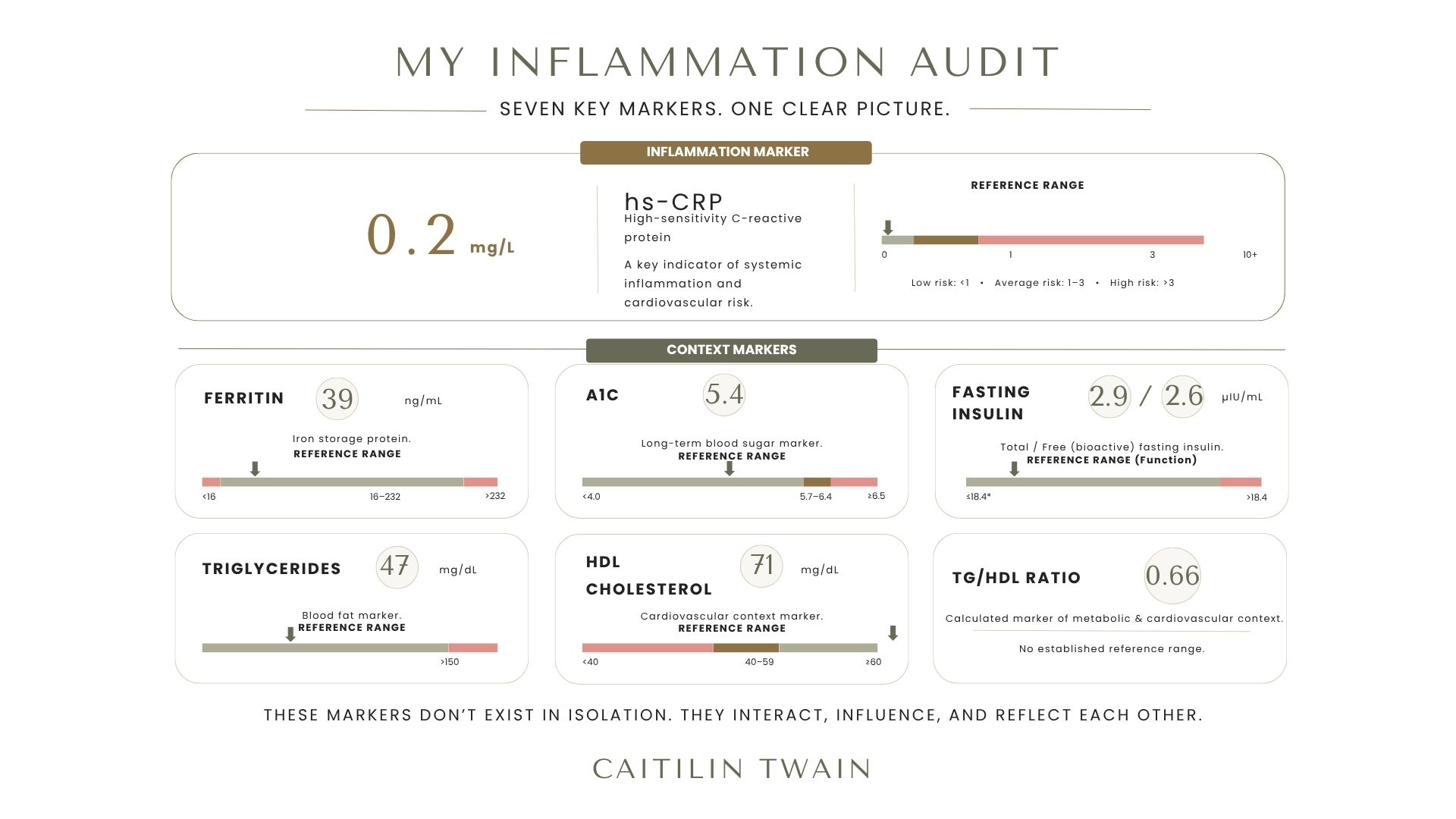
Those context numbers should look familiar if you've been following this series.
My blood glucose and insulin audit showed strong underlying insulin sensitivity, while my lipid audit showed an excellent triglyceride-to-HDL ratio.
Of course, that lipid audit also uncovered my elevated Lp(a), a largely genetically determined cardiovascular risk factor. That number is one I’ll be paying close attention to, likely for life.
A low hs-CRP doesn't erase my high Lp(a). But neither should one elevated risk marker erase everything else we know about my cardiovascular and metabolic health - which appear to be quite good.
That's exactly why I keep arguing against interpreting biomarkers in isolation.
My Lp(a) tells me something important about inherited cardiovascular risk. My hs-CRP tells me that my lifestyle is keeping me healthy. Glucose, insulin and triglycerides tell me about metabolic health. My body composition, VO₂ max, fitness, sleep and the rest of this audit add still more information.
Put them together and we get something far more useful than any one “good” or “bad” number:
A picture.
And that picture gives me something I can act on.
Genetics may influence risk, but they don't get the final word.
I can’t change the genes I inherited, but I can influence the biological environment in which they're expressed.
That's where lifestyle becomes so powerful: how I eat, move, sleep and recover; my body composition and metabolic health; how I manage stress; what I'm exposed to; and, when appropriate, targeted supplements or medical interventions.
Measure the risks. Understand what may be driving them. Work on the levers you can influence. Then measure again.
Because a risk factor is not a destiny.
Why I Keep Testing
This is one of the reasons I've started using Function Health.
A conventional annual physical can provide valuable information, but I wanted a much broader baseline and the ability to follow biomarkers over time. Function currently includes 160+ lab tests annually across cardiovascular, metabolic, thyroid, hormone, nutrient, immune and other areas, with testing at least twice yearly and results tracked longitudinally. It also provides explanations, clinician review and action plans.
That last piece matters to me.
A single lab result is a photograph. Repeated testing starts to give you a movie.
We change. So do our biomarkers.
If I change how I eat, train, sleep or recover, I want to know whether the physiology is moving with me. If a marker starts drifting in the wrong direction, I'd rather see the trend before it becomes a bigger problem.
If you'd like to establish your own baseline and track your markers over time, you can use my Function Health referral link for $25 off.
Disclosure: This is my referral/affiliate link.
How Do You Lower Chronic Inflammation?
Here's the encouraging part.
If you've followed this entire Birthday Audit, you already know most of the answer.
The same interventions that support healthier inflammatory regulation kept appearing throughout the previous nine metrics.
Move
Regular movement is associated with lower levels of chronic systemic inflammation. A hard workout can temporarily increase inflammatory signaling, but that’s part of the adaptation process; regular training is associated with a healthier inflammatory profile.
And movement works through multiple systems at once.
Strength training preserves muscle and supports glucose regulation, while weight-bearing and resistance exercise help maintain bone. Movement also helps circulate lymph, which relies heavily on muscle contractions and breathing to move fluid through the lymphatic system and support normal immune function.
Maintaining muscle and a healthy body composition matters here too. As we’ve seen, visceral fat can promote inflammatory signaling while muscle helps support insulin sensitivity and metabolic health.
Muscle, bone, metabolism, circulation, lymphatic flow and immune health all benefit when we move.
Eat for the System, Not the Superfood
You can't out-supplement the way you eat every day.
There is no berry or root powerful enough to compensate for an otherwise lousy lifestyle. But nourishing food, eaten consistently, can be one of our most powerful forms of preventive medicine.
The strongest evidence isn't around one magical ingredient, but dietary patterns.
What we eat every day influences metabolism, blood sugar, cardiovascular health, the microbiome and inflammatory signaling. Over time, those choices can help prevent or better manage the chronic conditions that eventually require medication.
Food isn't just fuel. Used well, it can be preventative medicine.
Protect Sleep and Make Room for Real Rest
My sleep audit already showed how far sleep reaches into health.
Inflammation is another part of that story.
But recovery is bigger than sleep.
Physical, mental, emotional and sensory overload can leave us chronically activated even when we're technically getting enough hours in bed.
I've written much more about this in What Kind of Tired Are You? and, more recently, What Shabbat Taught Me About the Seven Kinds of Rest.
Recovery is not what you do when you've finished taking care of your health.
Recovery is part of taking care of your health.
Regulate Chronic Stress
Stress isn't toxic. Stress is part of being alive.
The problem is chronic activation without adequate recovery.
Psychological stress communicates with immune function through the nervous and endocrine systems. That's why nervous-system regulation, breathwork, movement, meaningful social connection and practices that help us recover belong in a conversation about long-term health.
If your body rarely gets the message that the threat has passed, giving it deliberate opportunities to downshift matters.
I've written more about the physiology and practices I use in The Science Behind HeartMath® and about the bigger question of whether the way we're living supports our health in Editing Your Life.
Don't Ignore the Boring Stuff
Don't smoke.
Keep alcohol reasonable.
Address persistent infections.
Treat medical conditions that require treatment.
Maintain metabolic and cardiovascular health.
And take care of your teeth and gums. Gum disease isn’t merely a dental problem; periodontal disease involves chronic inflammation and has been associated with systemic inflammatory burden and cardiometabolic disease.
The boring stuff isn’t very sexy.
It’s still medicine.
Your Turn! Audit Your System
If you're reading this thinking, I have no idea what my inflammation looks like, start with what you already have.
Pull out your latest labs. Is hs-CRP there? What about your CBC, ferritin and iron studies, glucose, HbA1c, fasting insulin and triglycerides? If something hasn’t been measured, ask your doctor whether it makes sense for your medical history.
Then look beyond the lab report.
How are you sleeping? How are you pooping? Are you moving every day and maintaining muscle? Do you have too much visceral fat? What does your diet look like over the course of a week? Are you living in constant stress activation with very little recovery? Do you smoke? How much alcohol are you drinking? Are your teeth and gums healthy? Is there an infection, metabolic problem or medical condition that needs attention?
Don't try to “lower inflammation” as though it were one switch you can flip with a supplement or cleanse.
Look for the inputs.
Work on what you can influence.
And then measure again.
Ten Longevity Metric Audits Later...
At 55, I have some numbers I'm pleased with, some I'm watching and some that have already changed what I'm doing.
That's exactly what I wanted from this audit.
Not to prove that I'm healthy.
Not to earn an A in aging.
And definitely not to stop aging.
Interestingly, Function's biological-age calculation currently puts me 8.3 years younger than my chronological age.
I'll take it.
But I don't mistake a biological-age algorithm - or any single metric - for a verdict on how well I'm aging.
That's actually the lesson of these ten audits.
No single number tells the whole story.
I want to know what I can do today to give the woman I'll be at 65, 75 and 85 the strongest possible body and mind to live in.
Ten metrics later, that's still the goal.
Only now I can see the system much more clearly.
Frequently Asked Questions
What is inflammaging?
Inflammaging is the term researchers use for the chronic, low-grade inflammation that tends to increase as we age. Unlike the short-term inflammation that helps us fight an infection or heal an injury, inflammaging can persist quietly in the background and is associated with many age-related conditions, including cardiovascular disease, type 2 diabetes, frailty and neurodegenerative disease.
What blood tests can show inflammation in the body?
There isn't one test that tells you everything about inflammation. CRP and hs-CRP are commonly used inflammatory markers, while ESR may be useful when a doctor is investigating inflammatory or autoimmune conditions. Other tests, including a CBC and ferritin, can provide additional context but aren't direct measures of chronic systemic inflammation. For a longevity-focused assessment, hs-CRP is one of the numbers I particularly want to know.
What is hs-CRP and what does it tell you?
High-sensitivity C-reactive protein, or hs-CRP, measures very low levels of C-reactive protein in the blood. Because it can detect low-grade inflammation, it's particularly useful when assessing systemic inflammation and cardiovascular risk. Importantly, hs-CRP can tell you that inflammatory activity may be present, but it can't tell you what's causing it. Infection, injury, metabolic dysfunction, visceral fat, smoking, poor sleep, periodontal disease and inflammatory medical conditions are among the many factors that can influence inflammation.
What is a good hs-CRP level?
In cardiovascular prevention, an hs-CRP of 2 mg/L or higher is considered a risk-enhancing factor when assessing overall cardiovascular risk. But biomarkers aren't pass/fail tests. An hs-CRP result should be interpreted alongside your health history, symptoms and other cardiovascular and metabolic risk factors. Acute illness can also temporarily raise CRP, which is why an unexpectedly high result may need to be repeated when you're well.
Can you have inflammation even if your hs-CRP is normal?
Yes. A low hs-CRP doesn't prove that there is no inflammation anywhere in your body. It is one measure of systemic inflammatory activity at a particular point in time. That's why I keep coming back to the same principle throughout this Longevity Audit: don't interpret one biomarker in isolation.
What causes chronic inflammation?
There isn't one universal cause. Chronic inflammation can be influenced by metabolic dysfunction, excess visceral fat, smoking, chronic psychological stress, inadequate sleep and recovery, periodontal disease, persistent infections and inflammatory medical conditions, among other factors. Rather than simply asking, How do I lower inflammation?, a more useful question is often: What might be driving inflammation in my body?
Does high ferritin mean you have inflammation?
Not necessarily. Ferritin primarily reflects stored iron, but it is also an acute-phase reactant, meaning inflammation can cause it to rise. That's why an elevated ferritin result needs context. Your doctor may look at your other iron studies, blood count, CRP, medical history and other findings before deciding what the number means.
Can insulin resistance cause inflammation?
Insulin resistance and chronic inflammation can influence each other. Inflammatory signaling can interfere with the way cells respond to insulin, while metabolic dysfunction can itself promote inflammatory pathways. That's one reason I look at glucose, HbA1c, fasting insulin and triglycerides together, rather than waiting for fasting glucose alone to become abnormal.
What are the best ways to reduce chronic inflammation?
There isn't one anti-inflammatory food, supplement or cleanse that fixes chronic inflammation. The strongest strategy is to work on the larger physiological environment: regular movement and strength training, a nutrient-dense dietary pattern, maintaining muscle and metabolic health, adequate sleep and recovery, chronic stress regulation, avoiding smoking, moderating alcohol, caring for your oral health and treating medical problems that require treatment. The recurring theme of this entire audit applies here too: work on the system, not just the number.
Should everyone get an hs-CRP test?
A C-Reactive Protein, or hs-CRP, can provide valuable additional information about cardiovascular and inflammatory risk, but it doesn't replace standard cardiovascular assessment or appropriate medical evaluation. If it isn't included in your labs, it's reasonable to ask your healthcare provider for it.
Related Articles
Why I Track My Blood Sugar (Even Without Diabetes)
What the New Food Pyramid and My New Book Have in Common
Understanding Your Nervous System
Three Tools to Naturally Manage Stress and Anxiety
Why Diaphragmatic Breathing Matters
Always Tired? Uncover the Hidden Causes of Your Exhaustion
Coaxing the Nervous System Toward Healing
Author