Natural Constipation Relief: Why You’re Constipated and What to Do About It
Sep 18, 2026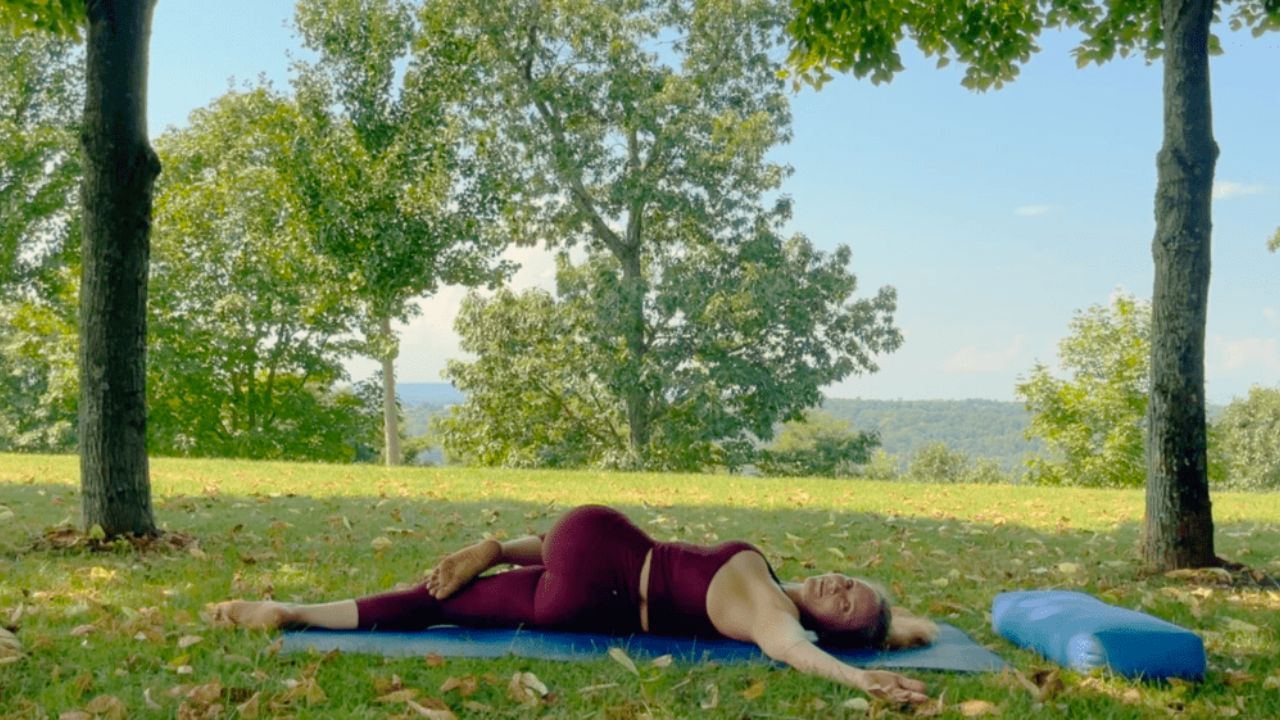
Years ago, a student came to me with mysterious back pain that was becoming increasingly intense. Nothing we tried was helping, so I asked her to see her doctor.
She came back with a diagnosis neither of us expected: she was so constipated that the pressure was contributing to her back pain.
Until then, it had never occurred to me to ask students about their regularity. And they certainly weren't volunteering the information.
Once I started asking, though, I discovered just how many people are quietly struggling with constipation - and how much it's affecting their lives. Bloating, discomfort, gas, nausea, irritability, hemorrhoids, feeling heavy or distracted, planning their days around whether they can go to the bathroom. For some people, it's a nuisance. For others, it's significantly interfering with how they feel and function.
So now regularity is one of the things I start asking about early in someone's healing journey with me.
Because constipation isn't simply about how often you poop. Your bowel habits can tell us something about hydration, food, medications, movement, sleep, pelvic-floor function, gut health, nervous-system regulation, and sometimes an underlying medical condition that deserves attention.
And chronic constipation isn't something we should simply learn to live with. Repeated straining can contribute to hemorrhoids, and severe constipation can progress to fecal impaction and, rarely, serious complications.
The good news is that there's a lot we can do.
In this article, we'll look first at why you may be constipated and what your bowel habits may be telling you, then I'll walk you through practical ways to help get things moving - from food, hydration and magnesium to abdominal massage, movement, breathwork and even the way you sit on the toilet.
Natural Constipation Relief: Why You're Constipated and What You Can Do About It
Constipation is one of those subjects people don't particularly want to talk about, right up until they can't poop.
Then it becomes very interesting indeed.
Most advice starts and ends with fiber, water, and perhaps a laxative. Those things can matter, but constipation is rarely just a plumbing problem. Your food, hydration, medications, movement, sleep, pelvic floor, nervous system, gut health, travel, bathroom habits, and even the way you sit on the toilet can all affect whether things move normally.
That's why I can't give you one magic remedy. Instead, I want to help you understand what may be slowing your system down, and then give you practical ways to get things moving again.
Why Am I Constipated? Common Causes of Constipation
Constipation is common, but that doesn’t mean there's one universal reason for it, or one universal fix.
Sometimes the culprit is obvious: travel, a change in routine, too little water, too little fiber, or a medication. Other times, constipation is one piece of a larger gastrointestinal, metabolic, hormonal, neurological, pelvic-floor, or nervous-system picture.
And often, more than one thing is happening at once.
Before reaching for a remedy, it’s worth getting curious about what may have changed. Your food? Hydration? Sleep? Stress? Movement? Medication? Travel? Bathroom habits?
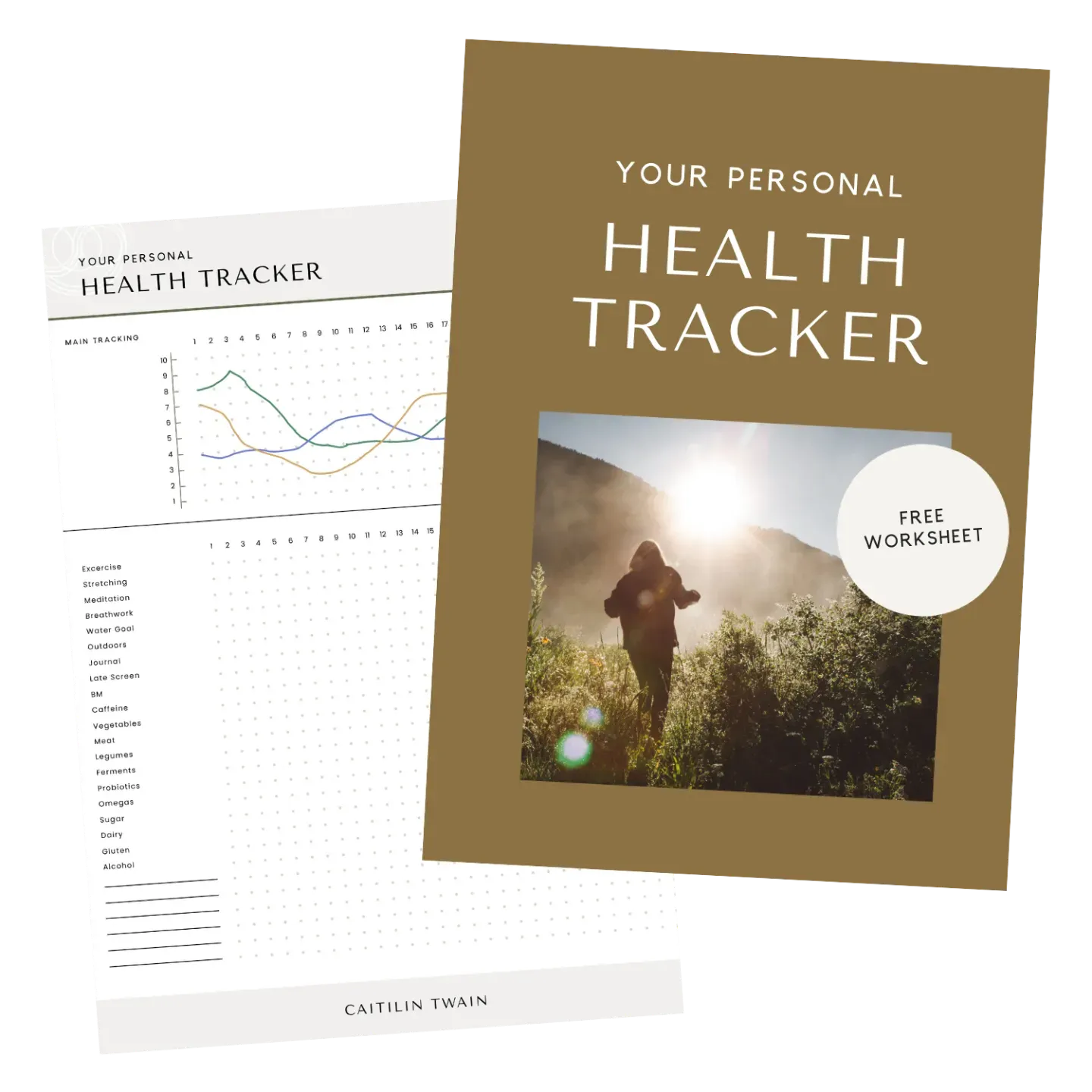
This is where tracking can be enormously useful. Rather than simply recording whether you pooped, look for patterns across several days: what and when you ate, fluids, sleep, exercise, medications and supplements, stress, travel, and bowel movements.
What Does Constipation Look Like? Use the Bristol Stool Chart
When people hear constipation, they often think it means not having a bowel movement for several days.
That’s certainly one version. But constipation can show up in other ways.
Some people have a bowel movement nearly every day but pass only a few small, hard lumps. Others go several days without a bowel movement and then suddenly pass very loose stool. Some strain, never feel fully emptied, or find themselves going back to the bathroom repeatedly without much success.
This is why I ask clients to pay attention not only to how often they have a bowel movement, but also to what it looks and feels like.
One useful tool is the Bristol Stool Form Scale, which groups stool into seven types:
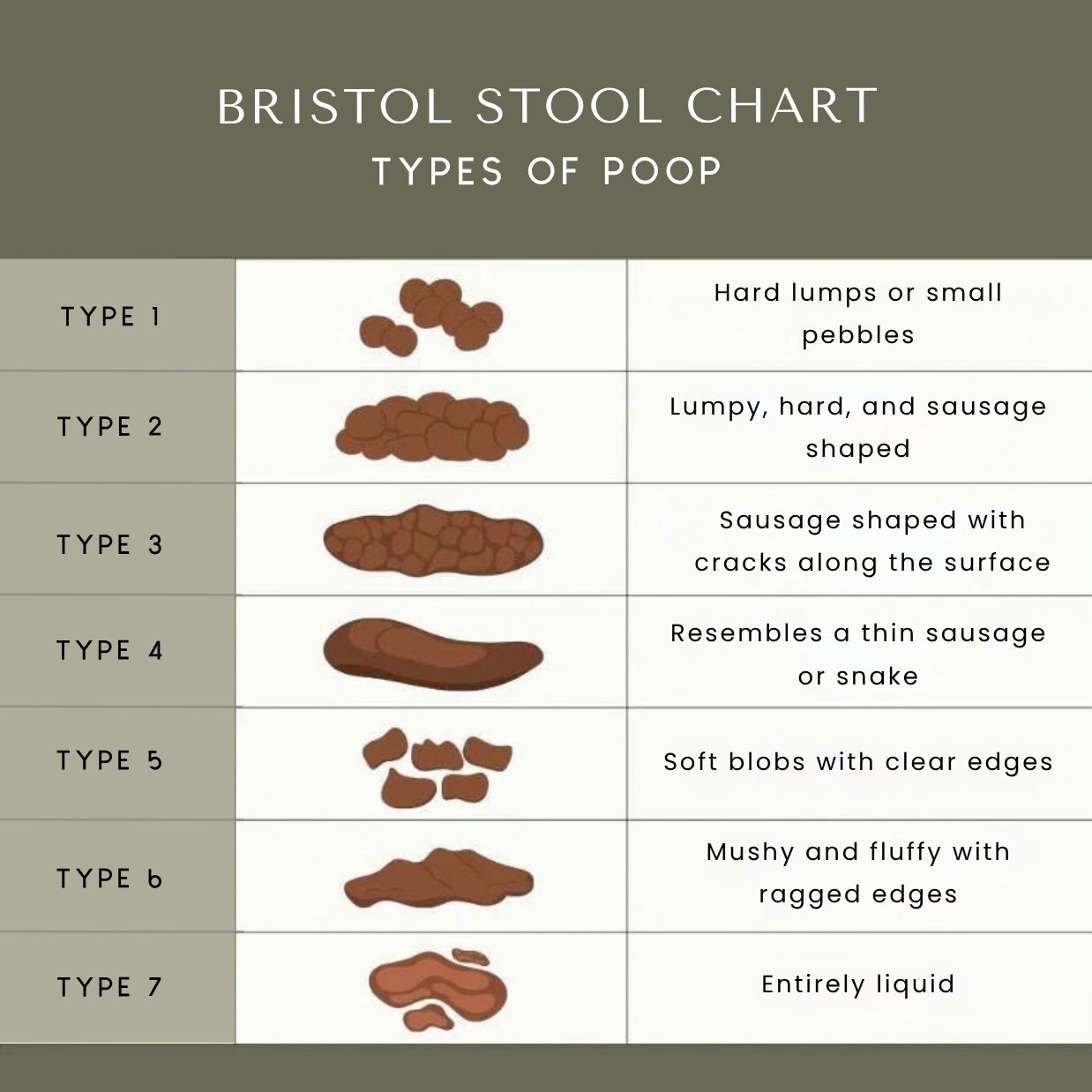
Types 1 and 2: Hard, lumpy stools. These generally indicate constipation. Small separate pellets, Type 1, are something I see frequently when someone isn't getting enough fluid, although hydration is only one possible contributor.
Types 3 and 4: Formed, softer stools. Think of the consistency of a banana - anywhere from green to very ripe. This is generally considered the sweet spot for healthy bowel movements.
Types 5 through 7: Increasingly soft to watery stools. At the far end of the scale, we're talking about diarrhea.
But even that chart doesn't tell the whole story.
For example, someone may tell me, “I'm not constipated, I had diarrhea yesterday.” Then we discover that they hadn't had a substantial bowel movement for several days beforehand.
Loose or watery stool after several days of constipation can sometimes occur with significant stool retention, so the pattern over time matters more than any single trip to the bathroom. If this is happening repeatedly, or you have significant pain, bloating, vomiting, blood in the stool, or other concerning symptoms, it deserves medical attention rather than simply treating the diarrhea.
This is where tracking becomes incredibly useful.
I don't need you to become obsessed with your poop. But I do encourage you to become curious about your patterns.
Track your Bristol type alongside things like hydration, food and fiber, movement, sleep, stress, medications and supplements, and travel or changes in routine.
Over time, you may begin to see your own cause and effect.
I barely drank yesterday, and today I'm passing pellets.
I haven't moved much for three days, and neither have my bowels.
Every time I travel and sleep poorly, my digestion slows down.
That information is far more useful than simply deciding, I'm constipated. What can I take?
Why Constipation Is More Common as We Age
Constipation is more common in older adults - but that doesn't mean getting older automatically makes you constipated.
What often changes with age are the things surrounding bowel function: medications, health conditions, activity levels, eating patterns, hydration, and sometimes pelvic-floor function.
We may move less. Our diets and medications may change. Other health conditions become more common. And some people deliberately drink less because they don't want to spend their day looking for a bathroom.
I see this particularly in people dealing with urinary urgency or leaking. Women may reduce their fluid intake hoping to minimize leakage; men with urinary or prostate issues may do the same to reduce frequent trips to the bathroom.
Unfortunately, chronically under-hydrating can make stools harder and more difficult to pass.
If urinary leaking is causing you to restrict fluids, I’d rather see you address the leaking than solve one problem by creating another. Pelvic-floor function is worth investigating, and absorbent liners can make the process much easier to manage while you do.
Gut Health, IBS and Other Gastrointestinal Causes of Constipation
The gut is an ecosystem, and constipation can be part of a much larger gastrointestinal picture.
IBS, diverticular disease and other digestive disorders can involve constipation, diarrhea, or an uncomfortable swing between the two. The trillions of microorganisms living in your gut also play a role in digestion, and we're learning more all the time about the relationship between the microbiome and bowel function.
This is also why generic advice like eat more fiber isn't always useful.
Fiber is enormously important for most of us. But if you have significant bloating, pain, IBS, suspected SIBO or another gastrointestinal condition, suddenly piling large amounts of fermentable food or fiber into your diet may make you feel considerably worse.
Introduce changes gradually and pay attention to how your own body responds.
If your gut has been disrupted, particularly after antibiotics, I created my Gut Health Reset Mini-Course to explain what happens to the gut ecosystem and practical ways to support it as you rebuild.
The Gut-Brain Connection: Stress, Tension and Constipation
I want to tread thoughtfully here, because constipation is physiological. It should never be dismissed as “all in your head.”
But your brain and gut are in constant conversation.
Stress can change gastrointestinal function. So can the way we breathe, brace, hold tension and respond to the sensation of needing to use the bathroom.
Over years of working with bodies, I've become interested in something less easily measured: some people who struggle with chronic constipation seem to have an extraordinarily difficult time letting go, physically as well as emotionally.
That does not necessarily mean constipation is caused by being controlling or chronically tense.
It does make me curious about the body’s larger pattern.
Do you habitually grip your abdomen? Hold your breath? Clench your pelvic floor? Rush through the day? Ignore the urge to go? Have trouble allowing your belly to soften?
The old expression “gut feeling” exists for a reason. The digestive tract and nervous system are deeply interconnected, and often, working with the nervous system belongs alongside working with food and movement when it comes to constipation relief.
One of the simplest places to begin is with the breath.
Later in this article, I’ll also show you how I combine relaxation, belly breathing and abdominal massage to help create the conditions for movement through the gut.
Can Poor Sleep and Travel Cause Constipation?
Absolutely, and anyone who's traveled across several time zones may already know this from experience.
Your digestive system has rhythms too. Sleep disruption, jet lag, unfamiliar food, changed meal times, less movement, dehydration, and simply having a different bathroom routine can all pile on at once.
I have experienced this myself while traveling, even though I'm normally very regular.
This is one reason I don't think of constipation as an isolated plumbing problem. Your body likes rhythm.
If travel reliably throws off your digestion, prepare for it. Keep moving. Pay attention to hydration. Eat real food with fiber. Give yourself time in the morning rather than racing out the door. And when possible, protect your sleep.
I also travel with magnesium citrate, which I’ll discuss below.
Medications and Supplements That Can Cause Constipation
If constipation begins, or gets significantly worse, after starting a medication or changing a dose, don't overlook the obvious.
A number of medications and supplements can contribute to constipation, including some opioid pain medications, antidepressants, anticonvulsants, anticholinergic medications, calcium-containing antacids, certain blood-pressure medications, and iron supplements.
That doesn't mean you should stop a medication because you're constipated.
It means the timeline matters.
Look back: When did the constipation begin? What changed around that time?
This is another excellent use for tracking. Bring the pattern to your physician or pharmacist and ask whether a medication, supplement, dose change, or interaction could be contributing, and what alternatives or countermeasures might be appropriate.
Health Conditions That Can Cause Constipation
Sometimes constipation is a symptom rather than the primary problem.
Diabetes, hypothyroidism, Parkinson’s disease, multiple sclerosis, celiac disease, pelvic-floor dysfunction and other conditions can affect bowel function. Mechanical or anatomical problems in the gastrointestinal tract can also interfere with normal elimination.
Persistent constipation therefore deserves more than an endless cycle of home remedies.
If constipation is new, severe, persistent, or accompanied by symptoms such as rectal bleeding or blood in the stool, persistent abdominal pain, vomiting, fever, inability to pass gas, or unexplained weight loss, seek medical care.
The goal isn't to frighten you. It's to distinguish the ordinary my routine is off and I haven't pooped properly in two days variety of constipation from a symptom that deserves investigation.
Natural Ways to Relieve Constipation
Once you've considered why you may be constipated, we can talk about what you can actually do about it.
There's rarely one magic intervention. I prefer to think in categories: food and hydration, gut health, supplements when appropriate, breath and relaxation, abdominal massage, movement, and the mechanics of how you actually sit on the toilet. Choose one or some that resonate or seem the easiest to implement, and notice what happens. Eventually, you might explore them all.
Fiber and Hydration for Constipation
Be a good host, would you?
Take care of your microbes and they can do a remarkable amount of work on your behalf.
Vegetables, fruits, legumes, nuts, seeds and healthy whole grains provide fiber that helps support normal bowel function. Many forms of dietary fiber also feed the microorganisms living in your gut. But some of you are better without the legumes and grains - follow the signals from your body, because ultimately it knows best.
When it comes to fiber, more isn't automatically better. Increase fiber gradually, particularly if your diet has been low in it. And remember what I said earlier: if you have significant gastrointestinal symptoms, IBS, SIBO or another digestive condition, your ideal strategy will be more individualized.
Fiber also needs fluid. Without enough hydration, adding more fiber can sometimes make constipation worse rather than better.
There’s no single perfect amount of water for everyone. Your needs change with your body, diet, activity level, climate, medications and more. Pay attention to your thirst, how much you sweat, urine, and, now that you know your Bristol types, your poop. If you’re consistently passing small, hard stools, hydration is one of the first things I’d investigate.
This is another place where tracking can help you find your sweet spot.
Does Coffee Help You Poop?
And coffee drinkers, take note: your morning coffee counts a bit toward your fluid intake even though it has a mild diuretic effect. It may also be helping you poop.
Coffee stimulates activity in the colon in some people, sometimes within minutes, and caffeine doesn't appear to be the whole explanation, because decaffeinated coffee can have an effect too.
I personally drink a large glass of water before my morning coffee. After going all night without fluids, my body appreciates the water first, and then I happily have my coffee. Try it and see if that feels better for you too.
So if coffee reliably helps get things moving in the morning, and you are someone who tolerates caffeine well, I don't see a reason to feel guilty about it.
Gut Health, Fermented Foods and Constipation
I’m a big fan of fermented foods for people who tolerate them.
Your gut microbes aren't just along for the ride. They help break down components of the food you eat and produce metabolites that interact with the intestinal environment and may influence how efficiently things move through your gut. And the relationship goes both ways: how quickly or slowly material moves through your intestines can influence the microbial community living there.
Bacteria also make up a surprisingly substantial portion of the solid material in our stool. So when we're talking about healthy elimination, it makes sense to pay some attention to the ecosystem helping create it.
In my Gut Health Reset Mini-Course, I go much deeper into fermented foods and teach you how to incorporate ferments to support the microbial ecosystem in your gut, particularly after antibiotics.
Do Prunes Help With Constipation?
And one food deserves a special mention here: prunes. They provide fiber, but they also contain sorbitol, a naturally occurring sugar alcohol that draws water into the bowel and can help soften stool and get things moving. It’s one reason prunes have earned their longstanding reputation as a constipation remedy.
Interestingly, constipation isn't why I started eating them. I began eating about six prunes a day after reading research suggesting that roughly that amount may help preserve bone density in postmenopausal women. The unexpected bonus? I noticed a definite improvement in the quality and consistency of my stool.
So I keep eating them. Better bones and better poop? I'll take both.
Magnesium for Constipation and Other Supplements
Different forms of magnesium behave differently in the body. Some forms draw water into the intestines, which can soften stool and make it easier to pass. This is one reason magnesium can be helpful when constipation starts creeping in.
I personally travel with magnesium citrate, especially when crossing time zones, because travel is one of the few things that can throw off my normally regular digestion.
But magnesium isn't automatically appropriate for everyone. The form and dose matter, and people with kidney disease or other medical conditions should talk with their healthcare provider before supplementing.
There are other supplements and herbal preparations marketed for constipation, but I don't think you need a cabinet full of remedies. Start by looking at the fundamentals we've already discussed, and use supplements thoughtfully rather than continually forcing the bowel to move.
Abdominal Massage for Constipation Relief
This is one of my favorite tools because it combines anatomy, touch, breath and relaxation.
And there is now a growing body of research behind it. Studies of abdominal massage have found improvements in constipation symptoms, bowel-movement frequency, stool consistency and intestinal transit time.
But first, a quick anatomy lesson so you know you're going with, not against, the flow.
Your large intestine travels up the right side of your abdomen, across the body beneath the ribs, and then down the left side before eventually moving toward the rectum.

Lie comfortably on your back. I like to put a rolled blanket, bolster or cushion beneath the knees and support the head if needed.
Before doing anything with your hands, breathe.
Let your belly expand as you inhale. See whether you can release some of the habitual gripping around the abdomen as you exhale. You don't need to push your belly out or force it to relax. Instead, give it permission to soften.
Then begin the massage.
Move your hands up the right side of your abdomen, across the upper abdomen, and down the left side, following the general path of the colon. Use comfortable pressure and move slowly. This should feel supportive, not aggressive.
The lower right abdomen is also where the small intestine meets the large intestine at the ileocecal valve. I sometimes find people are particularly tender or guarded in this area. Rather than trying to force anything to "release," I work with breath, relaxation and gentle touch and pay attention to how the tissue responds.
Your abdomen isn't just plumbing. It's living tissue surrounded by muscle, fascia and an extraordinarily rich nervous system. Sometimes the first useful intervention is simply helping the entire area become less guarded.
Yoga and Movement for Constipation Relief
Movement is another powerful way to encourage digestive flow.
Walking is a wonderful place to start. But I also use specific movements that change pressure within the abdomen, lengthen and shorten the torso, move the hips and pelvis, and encourage the belly to soften.
I created the sequence below specifically for constipation.
It begins by softening the body, particularly the abdomen, and then moves through positions that lengthen and contract the torso in waves. We put pressure first around the ascending colon and then the descending colon, following the direction things need to travel.
The sequence also incorporates squatting, which changes the relationship between the pelvis, pelvic floor and bowel and can be particularly useful when you're trying to get things moving.
You may want a blanket or two and a bolster, although a firm cushion or tightly rolled blanket works too. If squatting isn't accessible to you, use a bench, stool or low chair for support.
A Note About Twisting When You're Constipated
You'll notice that I don't offer many twists in this particular sequence.
If you are very constipated or haven't had a substantial bowel movement for several days, I prefer not to add strong twisting or compression through an already uncomfortable, distended abdomen.
If you're not severely backed up, twists can be wonderful.
In fact, I regularly incorporate twisting into movement because of what it does for the spine, rib cage, and digestive flow. The distinction here is between using movement to support healthy regularity and aggressively twisting an abdomen that is already extremely full and uncomfortable.
Listen to your body. If something increases pain, pressure, nausea or significant discomfort, stop.
The Best Toilet Position for Constipation
How you sit on the toilet matters too.
Most modern Western toilets put us in a relatively upright seated position. A deeper squat changes the mechanics of elimination. Research using imaging has shown that a full squatting position can create a straighter anorectal pathway and may reduce the amount of straining needed to defecate.
Of course, you don't need to replace your toilet with a hole in the floor.
Put your feet on a small stool instead.
Raising your feet and bringing your knees higher than your hips moves you closer to the mechanics of a squat while allowing you to remain safely seated on the toilet. Let your belly soften and, most importantly, breathe.
Try not to turn a bowel movement into a strength competition. Bearing down harder isn't necessarily the answer, particularly if pelvic-floor coordination is part of the problem. Repeated straining, especially combined with sitting on the toilet for long periods, can also contribute to hemorrhoids.
One important distinction: putting your feet on a stool isn't the same thing as a full squat. Research on actual squatting supports meaningful changes in anorectal mechanics, while studies specifically testing toilet footstools in people with constipation have produced mixed results.
That doesn't surprise me. Simply raising your feet doesn't guarantee that the rest of your body, pelvis and pelvic floor will organize themselves exactly as they would in a natural squat.
I still think a toilet stool is a simple, inexpensive experiment worth trying, and I can attest that everyone in my family loves theirs - so the stool must be good for our shared anatomy. The goal isn't to force your body into a prescribed position. It's to find a position that allows you to soften, breathe, and eliminate without excessive straining.
Stress, Constipation and the Gut-Brain Connection
We've talked about food, fluid, microbes, supplements, massage, movement and toilet mechanics.
Now come back to something much simpler.
Can you soften?
For some people, that question is surprisingly difficult.
It might feel vulnerable or even scary to let the belly go. Many of us spend years holding it in, bracing it, strengthening it, protecting it or trying to make it look smaller.
But a strong core also needs to be able to yield.
You need suppleness and movement through the abdomen and diaphragm to breathe fully. And when it's time to eliminate, certain muscles need to be able to stop gripping.
This is one reason I use breathing and nervous-system regulation so often in my work.
For some people, there may also be an emotional component.
I don't mean that your constipation is imaginary or that you can positive-think yourself into a bowel movement. I mean that our emotional lives and physical bodies aren't separate systems.
If you recognize yourself in the idea of constantly holding, controlling, bracing or having difficulty letting go, get curious rather than judgmental.
A gratitude practice can be surprisingly powerful here. Gratitude shifts our attention toward what is already present and sufficient. For me, there is something beautifully compatible between that state and allowing the body to soften rather than continually trying to control it.
Read: Breathe Into Gratitude: A Potent Relaxer and Mood Booster
You can have a fiercely strong core and a soft belly.
In fact, a healthy body needs both.
Frequently Asked Questions About Constipation
What is the fastest natural way to relieve constipation?
There isn't one method that works fastest for everyone. Start by looking at the basics: hydration, food and fiber, movement, your normal bathroom routine, and whether anything recently changed. If you're significantly backed up, in pain, vomiting, unable to pass gas, bleeding, or experiencing other concerning symptoms, don't keep experimenting with home remedies - seek medical care.
Does coffee help with constipation?
It can. Coffee stimulates colonic activity in some people, and caffeine does not appear to explain the entire effect. If coffee reliably helps you have a bowel movement, you don't need to feel guilty about that. I personally prefer to drink some water before my morning coffee.
Do prunes really help you poop?
They can. Prunes provide fiber and naturally occurring sorbitol, which can draw water into the bowel and help soften stool. I started eating about six a day for their potential bone-health benefits and noticed a definite improvement in my own stool quality.
Does magnesium help constipation?
Some forms of magnesium draw water into the intestines and can soften stool. I personally use magnesium citrate when travel disrupts my regularity. The appropriate form and dose vary, and people with kidney disease or other medical conditions should discuss supplementation with their healthcare provider.
Can stress cause constipation?
Stress can affect gastrointestinal function, breathing, muscle tension, pelvic-floor coordination and bathroom habits. I don't reduce constipation to a psychological problem, but I do consider the nervous system an important part of the picture for many people.
Can abdominal massage help constipation?
Research increasingly supports abdominal massage as a useful non-drug strategy for chronic constipation. I combine it with slow breathing and follow the general path of the colon, up the right side of the abdomen, across, and down the left.
When should constipation be checked by a doctor?
If constipation is new, severe, persistent, or accompanied by rectal bleeding or blood in the stool, persistent abdominal pain, vomiting, fever, inability to pass gas, or unexplained weight loss, seek medical care.
Further Reading
Why Diaphragmatic Breathing Matters - Especially in Trauma Recovery
Breathe Into Gratitude: A Potent Relaxer and Mood Booster
She Came With Shoulder Pain. She Left Free of Diverticulitis.
Author