Hormones, Longevity, and the Essential Questions You Need to Ask Yourself, Because Your Doctor Might Not
Aug 18, 2026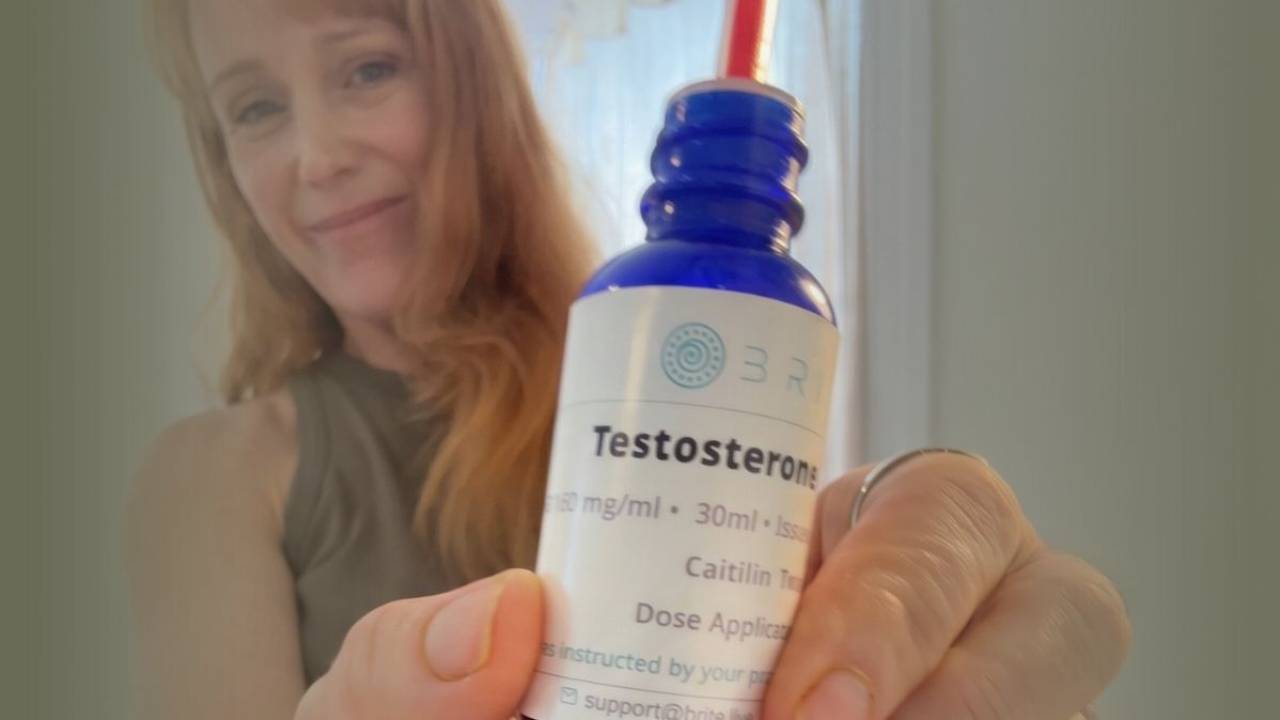
Part of the Longevity Metrics Series: Auditing My Health as I Turn 55
Let's start with the main reason I care so much about hormones as a longevity marker:
My Lp(a), the most dangerous number on my entire lipid panel, is elevated enough that I'm in the high-risk category. This number is genetic and generally fixed - you either get lucky or you don't. But menopause is one of the few things that can drive this number up, and it has in me. This means I'm far more likely to throw down plaque in my arteries, even while I maintain "excellent" lipid panel results.
I've been on hormone therapy for a few years, for many good reasons that I'll cover below, but mostly because estrogen is supposed to help lower Lp(a). So far, mine has only gone up.
That's not the result I expected when I got labs done to conduct my 55th Birthday Audit, but it does add a plot twist that's definitely not unique to me.
So let's dive in and explore what this means, and what I'm doing about it.
This post is built around five questions I think every woman considering, or already on, HRT actually needs answered:
- What the evidence says HRT can do
- What real risks are worth weighing
- How to choose between delivery methods
- How to tell if it's actually working
- How to make peace with doing all of this under genuine uncertainty.
I'll answer each one based on the latest research, then show you exactly how I've applied it to my own protocol - numbers included - because I think using me as a case study will help you think through your own numbers and decisions around HRT.
But before any of that: I need to tell you that Hormone Replacement Therapy has a controversial past, as it's moved from "no one should take it" to "everyone must be on it" within a very short period of time.
If you know me at all, you know I stand in my steadfast belief that "It depends on the individual" should be the mantra of anyone exploring any health trend, and this post should help you figure out how you can apply the latest research to your own unique body.
A Quick History: The Study That Changed Everything
In July 2002, results were announced from the estrogen plus progestin arm of the Women's Health Initiative (WHI). The headlines read that HRT leads to increased risks of breast cancer and cardiovascular disease, and the massive federally funded trial was stopped immediately, after only 5.2 years.
The news hit like a fire alarm. Overnight, millions of women stopped taking HRT. Doctors stopped prescribing it. A generation of menopausal women went cold turkey and managed their symptoms without hormonal support.
“Overnight, millions of women stopped taking HRT. Doctors stopped prescribing it. A generation of menopausal women went cold turkey and managed their symptoms without hormonal support.
What didn't come out until much later is that the study had fundamental design problems. The women enrolled had an average age of 63, and most had been postmenopausal for more than a decade before entering the trial - which is a biologically different situation from a woman in her late 40s or early 50s who has recently entered menopause. Furthermore, the trial administered conjugated equine estrogen and a synthetic progestin - not bioidentical estradiol and micronized progesterone, which bind receptors differently and behave differently in the body.
Dr. JoAnn Manson, one of the WHI's principal investigators, has since substantially revised the public interpretation of the findings. In a lengthy conversation with Dr. Peter Attia, she acknowledged that misinterpretation and sensationalized headlines contributed to widespread harm, and she has gone on to champion what's now called the "timing hypothesis": HRT started within ten years of menopause onset, or before age 60, may actually reduce cardiovascular disease risk by roughly a third, rather than increasing it.
Then, in November 2025 the FDA removed the broad black box warnings that had been attached to all estrogen-containing hormone therapy products since the WHI study.
Warnings for cardiovascular disease, breast cancer, and dementia were removed, and labels were rewritten with age-specific guidance, effective February 2026. The same regulatory body that spent 23 years warning women away from HRT removed those warnings.
So now that you have the backdrop, let's start asking some questions.
Question 1: What Can HRT Actually Do, Especially for Lifespan?
Heart health.
Initiated within ten years of menopause onset, estrogen may reduce coronary heart disease risk by roughly a third. It slows atherosclerosis (arterial plaque buildup), the same territory I covered in Metric 5 - Lipid Panels.
Metabolic health.
2025 review of 17 randomized controlled trials found HRT significantly improves insulin sensitivity in women without diabetes, the same territory I covered in Metric 7: The Link Between Blood Sugar and How Long You’ll Live.
Bone health.
In the largest study to date, of more than 137,000 postmenopausal women over five years, early HRT initiation was associated with a 13% reduction in fracture risk. A 2025 systematic review found HRT produces greater bone density improvements than exercise alone. Bone health is Metric 8 in this series and estrogen's role in skeletal integrity is one of the clearest findings in the literature.
Brain health.
Estrogen receptors sit throughout the brain, concentrated in the regions most relevant to memory, mood, and neuroprotection. It supports hippocampal neurogenesis, helps the brain metabolize glucose efficiently, and reduces amyloid-beta buildup, the protein most associated with Alzheimer's.
But before you jump on the HRT bandwagon for its cognitive benefits, I want you to know that the strongest, most consistent signal for cognitive protection is specific to carriers of the APOE4 gene variant, which is the strongest known genetic risk factor for late-onset Alzheimer's. One cohort study found APOE4 carriers on HRT scored highest on tests of delayed memory and had 6 to 10% larger entorhinal and amygdala volumes, brain regions central to Alzheimer's pathology, compared to APOE4 carriers not on HRT and to non-carriers altogether.
I'm APOE E2/E4, one protective allele, one risk allele. That's part of why this thread of research carries weight for me, not just academic interest.
Muscle and body composition.
Estrogen is directly involved in muscle physiology via receptors that regulate satellite cell function, the repair mechanism for muscle tissue, covered in Metric 6.
Testosterone, which also declines at menopause, directly affects muscle protein synthesis. I've definitely noticed it's become harder to build and maintain muscle, which is the main reason I chose to add testosterone to my hormone stack.
A meta-analysis of randomized controlled trials found the clearest muscle-mass benefit in women aged 50 to 60 with at least a year of HRT use.
Quality of life.
Hot flashes, night sweats, sleep disruption, brain fog, vaginal atrophy, mood dysregulation, joint pain, loss of libido: these are documented physiological consequences of sex hormone withdrawal, not cosmetic inconveniences, and HRT addresses them with the strongest evidence base of any available treatment.
Question 2: What Risks Are Worth Weighing?
There's a loud counterswing right now, with some high-profile longevity physicians arguing every woman should be on HRT indefinitely, full stop.
I don't think the evidence supports that either, and here's what I'd actually put on the scale:
Cancer risk isn't zero.
Cancer risk isn't zero, and it's not simple either, because it depends on two things that are easy to conflate:
- whether estrogen is taken alone or paired with a progestogen, and
- which specific progestogen - progesterone or a synthetic progestin - is in the mix. Progestin and progesterone are not the same molecule, and that distinction matters for cancer risk.
“Progestin and progesterone are not the same molecule, and that distinction matters for cancer risk.
Estrogen paired with a synthetic progestin shows a real increase in breast cancer risk with each year of use, and risk can take up to a decade to normalize after stopping.
But estrogen alone tells a different story: in the WHI's own 20-year follow-up, women who took estrogen alone (after hysterectomy, no progestin) had a statistically significant 23% reduction in breast cancer incidence and a 40% reduction in breast cancer mortality, the first hormonal intervention ever shown in a randomized trial to reduce breast cancer deaths. Dr. Avrum Bluming and Dr. Lindsey Berkson have both written extensively arguing this benefit got lost in the 2002 fallout and still hasn't been fully absorbed into mainstream guidance, which tends to treat "combined HRT" as one category rather than separating progestin from progesterone.
Endometrial cancer works in the opposite direction: unopposed estrogen - estrogen with no progestogen at all - stimulates the uterine lining and drives a real dose-response risk.
A meta-analysis found endometrial cancer risk roughly doubles with unopposed estrogen use, climbing to nearly ten times baseline with ten or more years of use, with elevated risk persisting for years after stopping. Some form of progestogen, whether progesterone or a progestin, is what protects against that specific risk.
This is why progestogen is a required part of any protocol for a woman with a uterus, not an optional add-on.
So here's the takeaway:
- estrogen alone looks protective against breast cancer in the WHI's own data, but raises endometrial cancer risk if the uterus is still present.
- Adding a progestogen protects the uterus, but which one matters enormously, as synthetic progestins appear to add breast cancer risk, while bioidentical progesterone does not appear to in the research reviewed here.
This isn't a one-line "progesterone is good" or "progesterone is bad" story. It depends on the hormone, the form, and the specific cancer.
“Which progestogen matters enormously: synthetic progestins appear to add breast cancer risk, while bioidentical progesterone does not.
Whether any of this should change your own protocol depends on two things most people never check.
- First, genetics: BRCA1 and BRCA2 push lifetime breast cancer risk from a baseline around 11% up to roughly 72% and 69%. PALB2 carries a similarly elevated risk, around 44%. CHEK2 and ATM matter too, and matter specifically here, since they're most strongly linked to estrogen-receptor-positive breast cancer, the exact subtype combined estrogen-progestogen therapy is associated with. If any of these run in your family, that's a conversation for a genetic counselor or a very informed doctor before starting HRT, not after.
- Second, and less well known: the type of progesterone matters independently of your genetics. A French case-control study found no increased breast cancer risk among women using micronized, bioidentical progesterone alongside estrogen, while synthetic progestins showed real elevated risk, with odds ratios as high as 3.35 depending on the compound. A broader meta-analysis found progesterone associated with meaningfully lower breast cancer risk than synthetic progestins when paired with estrogen.
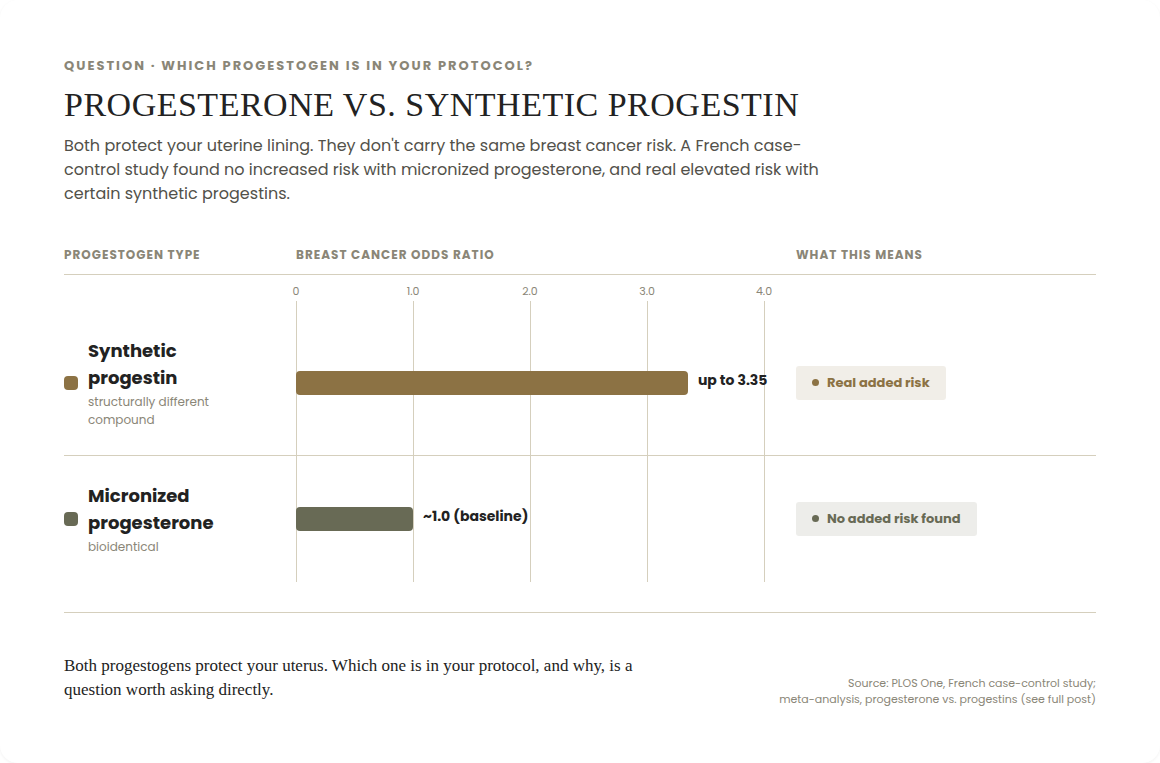
So "is HRT safe" isn't only just a genetics question. It also depends on whether your protocol uses bioidentical progesterone or a synthetic progestin, since those aren't interchangeable on this specific risk.
The brain story isn't fully settled either.
A March 2026 study in JAMA Network Open followed 2,766 women from the original WHI Memory Study for up to 25 years, measuring a blood marker (p-tau217) tied to Alzheimer's pathology. Higher levels predicted dementia risk strongly across the board, but the association was notably stronger in women who'd been on estrogen plus progestin than in the placebo group, with no such amplification in the estrogen-alone group. Remember - this is the same older, later-starting WHI population taking synthetic progestin. But it's new data, and I'd rather tell you that than pretend the brain story is fully resolved.
Compounded bioidentical hormones carry their own specific critique, separate from HRT generally.
Despite the fact that we've learned that synthetic hormones create problems (simply scan the paragraphs above), major medical organizations, including ACOG and the Menopause Society (formerly NAMS), are openly skeptical of compounding. They argue it hasn't gone through the same large-scale randomized safety trials as FDA-approved products, and without that oversight absorption, potency, and purity can vary in ways a commercial product can't.
Despite that argument, I've chosen to be on a compounded protocol, which brings us to the next section of this audit report.
Question 3: How Do You Choose a Delivery Method?
When I found myself between OBGYNs after moving to New York, I was beginning to feel some menopausal symptoms. The fastest path back to feeling normal was a mail-order service. Answer a questionnaire (to be fair, they did ask about cancer history in my family). Upload an ID. Wait for a doctor I never spoke with to approve it. A package with oral estradiol and progesterone showed up in the mail a few days later. No bloodwork. No path to testosterone at all, because there's no FDA-approved commercial testosterone product for women in the U.S.
It worked, in the sense that my symptoms improved. But nobody on the other end was paying attention to whether it was working well, or working at the right dose for me specifically. And for something this delicate - delicate enough that the wrong dose moves cancer risk one direction and Lp(a) another - "it worked" isn't the same as "someone is on top of this."
“It worked, in the sense that my symptoms improved. But nobody was paying attention to whether it was working well, or at the right dose for me specifically. “It worked” isn't the same as “someone is on top of this."
That gap is what made me feel like I was living in the wild west and sent me looking for something else.
Brite is the opposite of mail order drugs. I found it through Dr. Ilana Zablozki-Amir at Brooklyn Integrative Medicine: bio-identical topical hormones compounded in solvent-free organic oils, with weekly symptom check-ins, a call with my doctor every two weeks, and dose adjustments as fine as 0.05 ml. As far as I've been able to find, it's the version of compounded HRT with the most oversight actually built into it. That matters to me because I'm truly concerned about the risks I addressed above in Question 2.
To be transparent: I have no financial relationship with Brite or with Dr. Zablozki-Amir. No affiliate deal, no discount, no partnership. This is simply the protocol I chose and pay full price for, and I'm sharing it because it's genuinely part of my own case study, not because anyone asked me to promote it.
What I like about Brite:
Real, recurring follow-up instead of a one-time approval.
A topical delivery route that avoids first-pass liver metabolism, which matters for the clotting discussion below.
And the piece that actually matters most to me: titration control and close oversight.
Doses adjust in increments as small as 0.05 ml. That sounds like a small thing until you compare it to the alternatives. A friend of mine went the pellet route: a small rod of hormone inserted under the skin in a minor in-office procedure. It hurt for a while, and once it's in, there's no adjusting it. Whatever dose it was loaded with is what she got for months, no matter what her labs said in week three or week six. If it's too high, or too low, or her body's absorbing it faster or slower than expected, there's no dial to turn until it's time for the next one. Given everything in Question 2, that's the opposite of what I wanted.
I wanted a dial, not a dose I'm locked into for a season.
What's genuinely annoying about Brite:
At $350/month it costs meaningfully more than flat-rate mail order - which I justify because I'm getting the close oversight that I think any HRT protocol warrants, and I'm trusting that I'm getting the safest, highest quality hormones and carriers available. Also, if my doctor changes my formulation at any time, they send it to me at no additional cost.
The oils are heat-sensitive, so traveling with them means not leaving them in a hot car or checked luggage.
It's an oil-based topical, so some people find it messy going on, and some are cautious about letting pets or partners make skin contact until it's fully absorbed. I'm more relaxed about that last one than I probably should be.
I also have to admit that while I appreciate the very regular testing involved, I'm simultaneously put out by it (I know. Please don't judge). In addition to bloodwork, Brite promotes a 24-hour urine test at least 1-2 times in the first year in order to average out natural hormone spikes, and to get a window into how my body processes hormones. The test is not included in the monthly rate, and it requires making sure I stay close enough to home to collect all my pee in a single container. Then I have to freeze some of it before delivering it to the post office. It's a total pain on many fronts - so I take the test, but with a grumble.
Oral vs. transdermal: the trade-off that matters a lot more than you might think, and why I'm currently choosing what is counter-intuitive.
At the very beginning of this post I explained that I got a bummer roll of the genetic dice and am in the high-risk category for a lipid called Lp(a). Lp(a) is roughly six times more artery-damaging per particle than standard LDL (the "bad" cholesterol), and it rises by about 17% on average when estrogen declines at menopause.
Restoring estrogen should, in theory, help bring it back down, but how much depends heavily on delivery method. The research is consistent: oral estradiol lowers Lp(a) by roughly 20–25%. Transdermal estradiol lowers it by about 10–15%. There's essentially no published research on compounded transdermal oils specifically, which is the delivery method I'm using.
So why not just take oral, if it does more for lowering Lp(a)?
Because research shows oral estrogen carries meaningfully higher clot risk than transdermal, while transdermal has little to no measurable effect on clotting.
There's no free lunch here.
So for now, I'm offering myself up as a guinea pig and staying transdermal. I will keep you posted as I continue to track and test.
A Case Study: How I've Applied All of This to My Own Body
None of this is "do as I do." It's "see how I think," so you can run the same process on your own case with your own doctor.
The Labs: After Years on Mail-Order HRT and After three months on Brite
Here are the actual numbers, pulled from two blood panels drawn 3.5 months apart - before starting Brite and after reaching the max starting dose on all three hormones on the Brite protocol.
| Marker | Pre-Brite (Mail Order HRT) | Current | What Changed |
|---|---|---|---|
| Testosterone, Total | 24 ng/dL | 29 ng/dL | Up, now in range |
| Testosterone, Free | 1.4 pg/mL | 1.8 pg/mL | Up, now in range |
| Estradiol | <30 pg/mL | <30 pg/mL | Unchanged, still at the assay's floor |
| FSH | 97.8 mIU/mL | 104.7 mIU/mL | Essentially flat |
| LH | 43.6 mIU/mL | 41.8 mIU/mL | Essentially flat |
| Prolactin | 3.8 ng/mL | 5.4 ng/mL | Up slightly, still in range |
That flat FSH is the tell. If systemic estrogen were rising meaningfully, FSH should start coming down. It hasn't moved. There's still a lot of ceiling here, real room to increase dosage and watch FSH come into a healthier range.
Two numbers that don't get a clean before/after. Progesterone and Lp(a) were each measured with a different assay type at each timepoint, so a side-by-side comparison would actually be misleading rather than clarifying (which is its own small lesson in reading your own labs carefully!).
Progesterone: the pre-Brite value is blood serum (<0.5 ng/mL). My current bloodwork didn't test progesterone at all, so there's no current blood number to compare it to. The only current progesterone-related data I have is from a separate 24-hour urine panel, measuring pregnanediol, a progesterone metabolite, not progesterone itself, in different units entirely. It's not a blood-to-blood before-and-after; it's a different test measuring something related.
What it shows: 316, against an optimal range of roughly 1,879–2,477. That gap is a big part of why my new protocol increases the progesterone dose, but I want to be upfront that this isn't the same kind of comparison as the table above.
Lp(a): my 2023 result was 103 mg/dL (a mass-based assay). My July 2026 result was 141 nmol/L (a particle-count assay), flagged Above Range. Here's the trap I nearly walked into: those two units have no universal conversion factor between them, so reading this as "it shot up" would have been a real mistake.
What I do know is that it's way too high for my comfort, and this is a number I'll be watching closely.
My new protocol.
This is where the cancer-risk math in Question 2 stops being theoretical.
The whole reason I chose a slow, monitored process over a mail order option is that estrogen dose and cancer risk move in the same direction, gradually, and there's a real ceiling I don't want to find by accident.
Finding the sweet spot means my Lp(a) goes down without my dose climbing past the point where I risk giving myself cancer. I don't know exactly where that point is for me yet. That's the honest answer, and it's why I will continue to retest at least quarterly rather than guess.
Based on my concerns and my lab results, Dr. Zablozki-Amir and I settled on three changes, each answering a specific finding in the labs.
The estrogen blend shifted from 80% estriol / 20% estradiol to 60% estriol / 40% estradiol: estriol is the gentler, lower-proliferative-risk estrogen, estradiol is the one more associated with the Lp(a) and cardiovascular research I talked about in Question 1. Doubling estradiol's share while keeping estriol the majority component is a deliberate middle path, leaning into the hormone most likely to move Lp(a), without abandoning the gentler formulation.
Progesterone and testosterone doses were both increased, directly in response to how far below range progesterone came back and how low testosterone still was.
I'm not switching to oral estrogen yet, for the clotting-risk reasons in Question 3, and because there's no research I could find on how my compounded HRT compares to the patch data that research is based on.
I'm choosing to address my Lp(a) aggressively rather than isolate variables one at a time, given how high the number already is.
So I've also started taking vitamin C, berberine, and nattokinase, all based on research from Nick Norwitz, MD PhD, whose work I already point to in my lipid panels post. Adding three supplements in the same window as the hormone change means my next retest won't cleanly tell me which one moved the number, if anything does.
Question 4: How Do You Know If It's Working? Questions to ask yourself and your doctor
Whether or not your situation looks anything like mine, these are the questions worth asking yourself and taking to your own doctor:
Q: Do you know your APOE4 status, and does it change how you'd weigh the brain-health case?
Q: If you or a close relative carry a BRCA1, BRCA2, PALB2, CHEK2, or ATM mutation, or if there is a family history of breast or ovarian cancer, does that warrant genetic counseling before starting?
Q: Is the progesterone in my protocol micronized/bioidentical or a synthetic progestin, and does that change the breast cancer risk conversation?
Q: Is the estrogen a combination of estriol and estradiol? If so, in what ratio? If not, why not?
Q: Based on how many years has it been since my last period, does that put me inside or outside the ten-year timing-hypothesis window?
Q: What's the actual follow-up cadence going to be, one call, one annual visit, or ongoing check-ins, and how will dose changes be decided?
Q: What labs will we use to track whether this is working, and how often will we retest?
Q: Am I a candidate for testosterone as part of this, and if so, what's the plan for monitoring it?
Q: What's my Lp(a), and can we discuss how my specific delivery method affects it? (If you're choosing between oral and transdermal, has the clotting-risk trade-off actually been named, not just the benefit?)
Q: What's my FSH, and does the doctor read it as a signal of how much room there is to adjust dose?
I want you to go in with eyes wide open to the risks and benefits of HRT, and armed with questions that will make a meaningful difference in your treatment and maintenance plan.
And seriously - if your doctor can't answer these questions in a way that indicates they know what they are talking about, thank them for their time and find a doctor who does. There's just too much at stake here.
The Summary
Hormones affect nearly every metric in this longevity series: muscle mass, bone density, cardiovascular health, brain function, sleep, metabolic efficiency.
The decline of estrogen, progesterone, and testosterone at menopause is a central driver of how my next decades unfold, not a footnote.
The history of HRT advice is a lesson in epistemic humility. The positions held with the most confidence in 2002 were substantially wrong, and it took 23 years to unwind them.
That correction matters. So does the fact that a 2026 study is already complicating part of the brain story, and that my own Lp(a) hasn't moved in the direction I hoped yet.
None of that means the current consensus is final either. It means I keep tracking, keep testing, and I trust my body's data while keeping up with the research, especially when my data doesn't say what I was hoping it would.
I'm cautiously leaning in - with oversight, with precision, and with the intellectual honesty to update if the evidence, or my own numbers, keep changing.
If hormone health and how it connects to the rest of your longevity picture is something you want to think through with a guide, my concierge program is where we do that work.
Frequently Asked Questions
Is HRT safe?
It depends on hormone type, delivery method, timing relative to menopause, individual risk profile (family history, BRCA status, cardiovascular health, APOE4 status), and duration of use. For most women starting bioidentical HRT within ten years of menopause under practitioner oversight, current evidence suggests benefits outweigh risks. This is a conversation for a practitioner who knows your complete picture, not a protocol to adopt from a podcast.
How long does it take to know if HRT is actually working?
Symptom relief, hot flashes, sleep, mood, often shows up within weeks. Lab confirmation of hormone levels reaching target range typically takes a few months of consistent dosing before retesting makes sense. Effects on slower-moving markers like Lp(a), bone density, or muscle mass take longer still, often six months to a year, before you'd expect to see meaningful movement. That's part of why this isn't a "try it for two weeks and decide" kind of treatment.
What labs should someone starting HRT ask for, and how often should they be retested?
At minimum, a baseline sex hormone panel (estradiol, progesterone, testosterone, FSH, LH), a full lipid panel including Lp(a) and ApoB if your provider will run them, and depending on your history, an inflammatory marker like hs-CRP. Lp(a) is typically a once-in-a-while test, not something worth checking monthly, since it doesn't move quickly. A good baseline is checking hormone levels within a few months of starting or changing a protocol, then spacing out once things stabilize.
What is bioidentical HRT and how is it different from the hormones in the WHI study?
Bioidentical hormones share the same molecular structure as the hormones your body produces. The WHI study used conjugated equine estrogen and a synthetic progestin, neither bioidentical, which bind receptors and metabolize differently.
What's the difference between estradiol, estriol, and estrone, the three estrogens?
These are the three main estrogens the body produces. Estradiol (E2) is the most potent and the one most studied for cardiovascular, bone, and Lp(a) effects, it's also the one carrying the biggest first-pass liver effect when taken orally. Estriol (E3) is much weaker and considered the gentler, lower-proliferative-risk estrogen, common in compounded "Biest" blends specifically because it's thought to be lower risk to breast and uterine tissue. Estrone (E1) is the estrogen the body relies on most after menopause, produced in fat tissue as ovarian production declines. Compounded Biest formulas blend estriol and estradiol in a specified ratio (mine is currently 60% estriol/40% estradiol), a way of getting estradiol's benefits while leaning on estriol's gentler profile for most of the dose.
What is the timing hypothesis?
HRT initiated within ten years of menopause onset, or before age 60, appears to have a meaningfully different risk and benefit profile than HRT initiated later. Early-window evidence suggests cardiovascular and possibly cognitive benefit; the later window (what the WHI largely studied) is more complicated.
If you're past the ten-year timing window, or over 60, is HRT off the table entirely?
Not automatically, but the calculus changes. The timing-hypothesis research is strongest for cardiovascular benefit specifically within that early window; starting later doesn't have the same clear benefit data, and some risks, clotting in particular, increase with age regardless of when you start. It's a more individualized conversation at that point, weighing symptom severity, personal risk factors, and delivery method, rather than a default yes or no.
Does HRT prevent Alzheimer's disease?
Not proven, and not for everyone. The clearest signal is in APOE4 carriers specifically, where HRT has been associated with better memory and larger brain volume in Alzheimer's-vulnerable regions. If you don't know your APOE4 status, it's worth finding out.
Do genetic markers like BRCA1/2 change whether HRT is recommended?
They change how carefully it should be considered, not necessarily whether it's off the table. BRCA1 and BRCA2 push lifetime breast cancer risk from a baseline around 11% up to roughly 72% and 69%; PALB2 carries a similarly elevated risk, around 44%. CHEK2 and ATM are more moderate but specifically linked to estrogen-receptor-positive breast cancer, the exact subtype most associated with combined estrogen-progestin therapy. Anyone with these mutations, or a strong family history, should talk to a genetic counselor before starting, not after.
What's the difference between micronized progesterone and synthetic progestins, and does it matter for cancer risk?
Micronized progesterone is bioidentical, chemically identical to what your body produces, just processed into a form that absorbs well. Synthetic progestins are structurally different compounds designed to act on the same receptors. The distinction matters: a French case-control study found no increased breast cancer risk among women using micronized progesterone alongside estrogen, while synthetic progestins showed real elevated risk, odds ratios as high as 3.35 depending on the compound. A broader meta-analysis found progesterone associated with meaningfully lower breast cancer risk than synthetic progestins when paired with estrogen. It's worth knowing which one is actually in your protocol.
Why does the medical establishment discourage compounded bioidentical hormones specifically?
Compounded preparations haven't been through the same large-scale randomized safety trials as FDA-approved products, so potency and purity can vary between batches and pharmacies. ACOG and the Menopause Society recommend reserving compounding for allergies or dosing needs commercial products can't meet.
Is compounded HRT regulated at all?
Yes, but differently than commercial pharmaceuticals. Compounding pharmacies are regulated by state boards of pharmacy and, for larger-scale outsourcing facilities, by the FDA, but individual compounded formulations don't go through the FDA drug-approval process itself, meaning they haven't been through the same large-scale randomized safety trials as commercial products. That's the core of ACOG and the Menopause Society's critique: it's regulated as a pharmacy practice, not tested as a drug.
Why does estrogen delivery method matter for Lp(a)?
Oral estrogen passes through the liver first, which produces a stronger Lp(a)-lowering effect but also raises blood clot risk. Transdermal skips that first pass, safer for clotting, weaker for Lp(a). There's no dose of either that gets a strong Lp(a) effect with zero trade-off.
How is Lp(a) different from LDL cholesterol, and why does it matter more for some people?
LDL cholesterol measures the total mass of "bad" cholesterol circulating in your blood; Lp(a) is a distinct particle, structurally similar to LDL but with an extra protein attached that's roughly six times more artery-damaging per particle. Unlike LDL, which diet, exercise, and statins can meaningfully move, Lp(a) is almost entirely genetically determined and stays relatively fixed across your life, aside from things like menopause, which can push it up. That means someone can have a textbook-perfect LDL and triglyceride panel and still carry meaningfully elevated cardiovascular risk if their Lp(a) is high, which is exactly the situation I'm in. You can be assured that I will remain focused on the latest research and keep using my own body as a guinea pig when promising protocols emerge. Stay tuned.
Related Articles
How Sleep Quality Predicts Longevity - My Personal Data
Sexual Vitality Is a Reflection of Health
Redefining Medicine: Restoring Faith in Your Own Body
The VO2 Max Number That Will Determine Whether You Can Hike at 80
Heart Rate Variability, All-Cause Mortality, and Why Your Apple Watch Data Doesn't Make Sense
Author