What the New Food Pyramid and My New Book Have in Common
Mar 28, 2026
Earlier this year, the U.S. government released the 2025–2030 Dietary Guidelines, and with them came something many people thought was long gone:
The food pyramid.
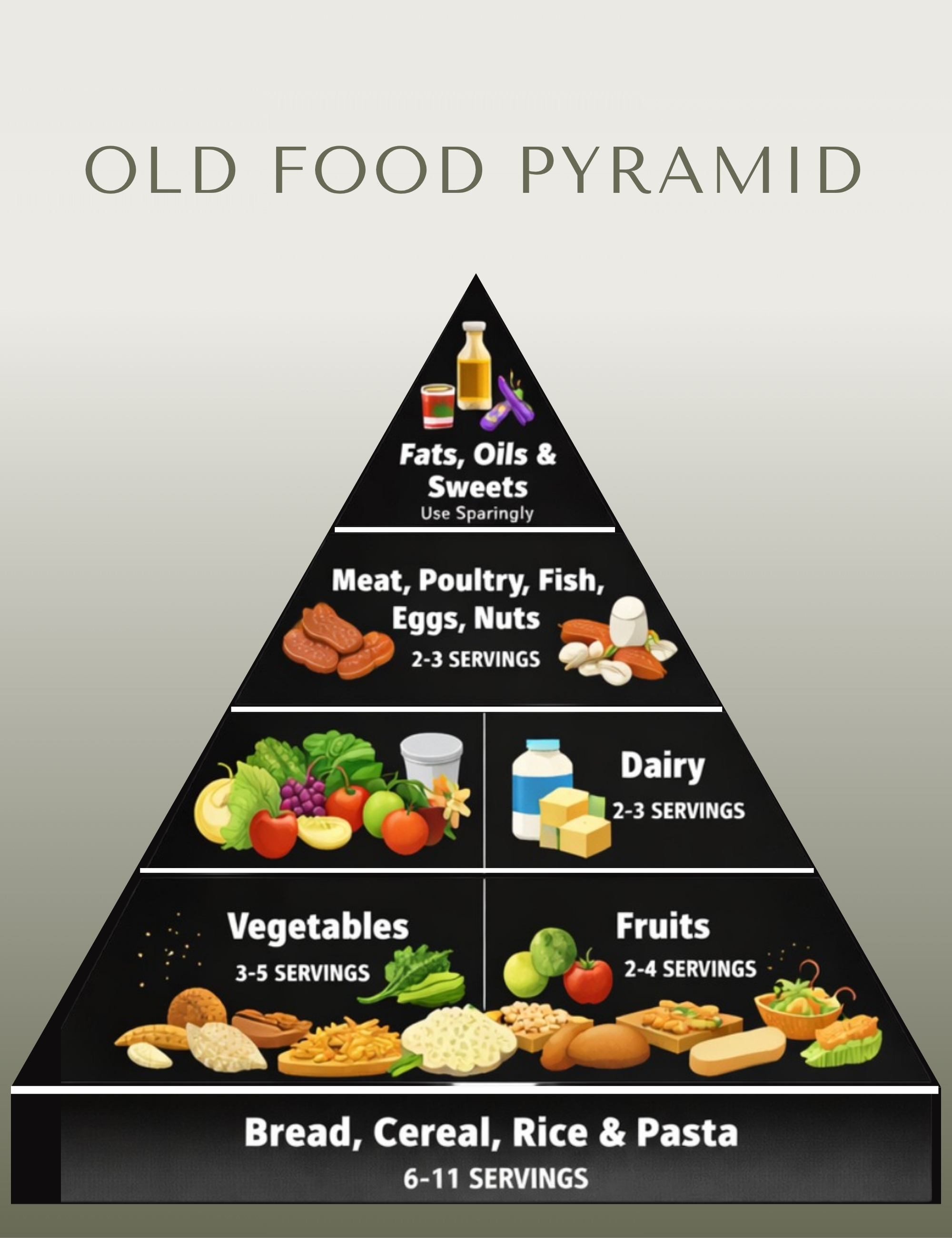
The original food pyramid launched in 1992, and as Michael Pollan explains in his masterpiece The Omnivore’s Dilemma, it was largely influenced by grain lobbyists and the terrible economic bind we’d created for the farming industry over previous decades. As you can see, we're encouraged to have grains as the foundation of our diet.
But this time it looks very different.
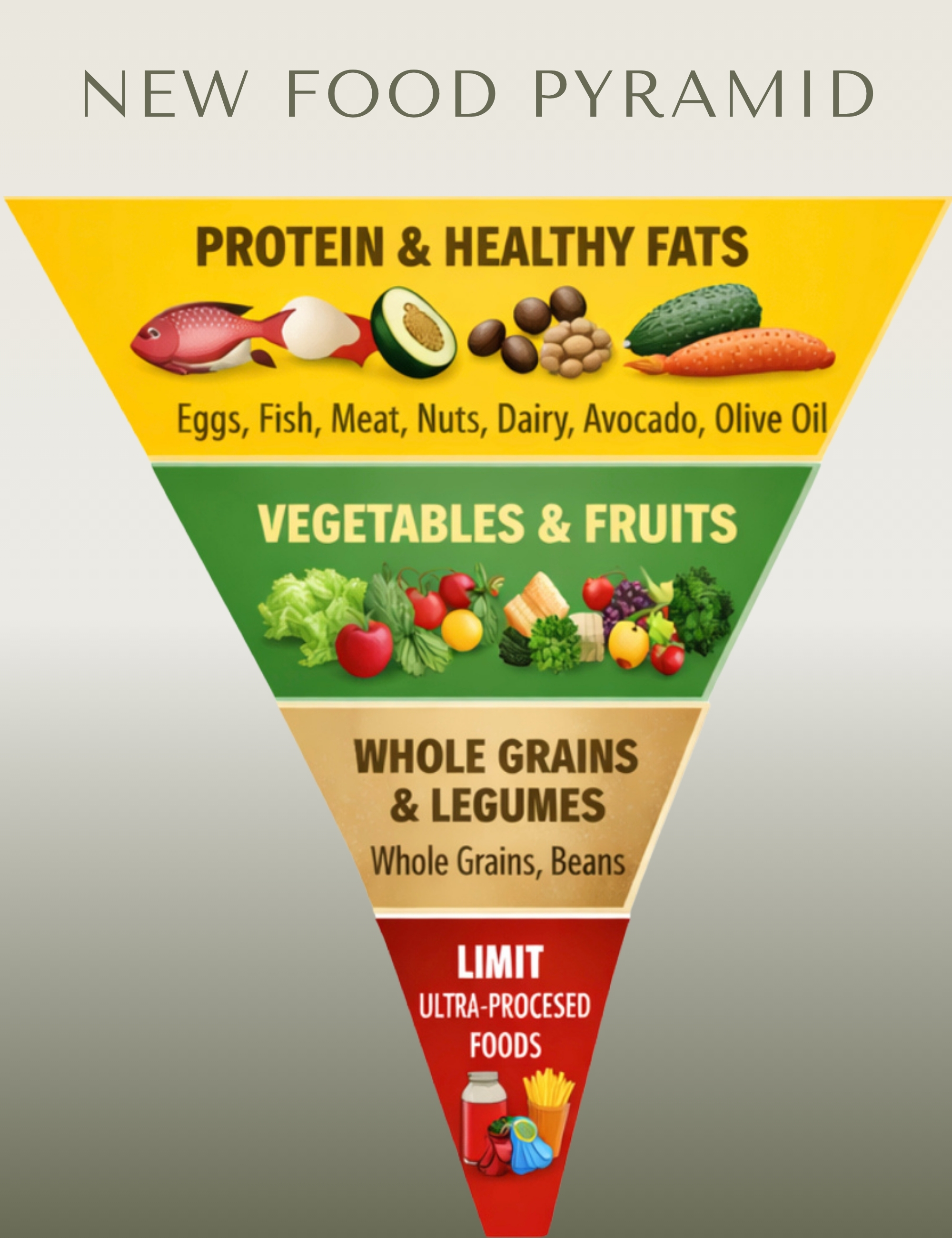
Instead of grains forming the base, the new model flips the structure. Protein, vegetables, fruits, dairy, and fats now dominate the pyramid, while grains occupy a much smaller portion. The guidance emphasizes eating real, minimally processed foods, increasing protein intake, and reducing refined carbohydrates and added sugars. (AgLife & Environmental Sciences College)
In many ways, that’s a meaningful shift from the advice we grew up with.
For decades Americans were told to build meals around carbohydrates, and reach for low-fat everything. The new guidelines move in a different direction, encouraging whole foods, healthy fats, and higher protein intake. (HHS.gov)
Some of that shift makes a lot of sense to me.
But the new pyramid also illustrates something important: nutrition advice keeps changing. Sometimes this change is driven by science, and sometimes by government policy fueled by economics and powerful lobbyists.
Why health policy is complex and nutrition advice is inconsistent
At the same time these new guidelines promote “real food” and healthier eating patterns, a subsequent policy decision reveals how complicated the system around our food supply can be.
In February 2026, an executive order invoked the Defense Production Act to prioritize domestic production of elemental phosphorus and glyphosate-based herbicides, declaring them critical to national security and agriculture. (The White House)
Glyphosate, the world’s most widely used herbicide, continues to be heavily used in American agriculture. It’s sprayed on crops like wheat, oats, corn, and soy, often not only to control weeds but also to accelerate crop drying before harvest.
Many countries have taken a far more cautious approach.
Several European nations have either restricted or are attempting to phase out glyphosate use because of concerns about environmental and health risks. The European Union has repeatedly reviewed the chemical and continues to debate its long-term authorization under strict regulatory scrutiny.
Meanwhile, in the United States, glyphosate remains deeply embedded in conventional farming and the Trump administration just deepened it.
The order drew both support and criticism. Some argued it was necessary for agricultural productivity and supply stability, while others worried about environmental and health implications. (Chemical & Engineering News)
On one hand, the government's nutrition guidelines tell Americans to eat healthier, whole foods. On the other hand, the same government encourages its agricultural system to rely heavily on chemicals that many scientists and regulators around the world remain concerned about.
My objective today isn’t to settle these debates.
My objective is to highlight something important:
Health policy and food systems are complicated and often at odds with each other. Which is why blind trust in any single nutrition framework has never made sense to me.
The Real Question: What should influence what goes in your body?
My answer: Not a politician. Not a headline. Not a trend. And not even a food pyramid.
It should be informed by science, yes. But it also needs to be tested against something even more important: your own body.
That is the heart of my chapter in The Ultimate Guide to Self-Healing, Volume 6, titled “Listen, Learn, Heal: How Tracking Reconnects You to Yourself.”
In that chapter, I tell the story of the moment I snapped out of blind faith in health trends. I had spent years battling Lyme disease and a thyroid dysfunction, which resulted in fatigue, brain fog, and pain. I was doing what so many conscientious people do: reading the research, following the advice, eating the “right” foods, trying the praised protocols.
Then one day I read that kale, yes kale, might worsen thyroid issues in some people because of its goitrogenic compounds, and I realized it might be contributing to my own problems.
That moment broke something open in me.
Not because kale is “bad.”
But because I realized I had spent years outsourcing my authority.
So I started tracking.
I took out a blank notebook and wrote: EVIDENCE FROM MY OWN BODY. I logged symptoms, sleep , food, routines, supplements, stressors, and patterns. Over time, I saw something powerful: foods and habits that were praised as healthy in general were not always healthy for me at all, or in that form, quantity, or season of life.
That’s the real lesson.
A food pyramid may offer a broad framework, but it cannot account for your genetics, hormones, or how your body responds day to day, which is why learning how to heal, including your gut health, in a personalized way often matters more than following general rules.
Tracking can. That’s why I’m such a strong advocate for it.
Tracking replaces generic advice with personalized evidence. It helps you stop guessing and start learning. It allows you to test foods, supplements, medications, routines, and wellness trends against your actual lived experience. It gives you a way to notice whether more magnesium helps you sleep better, whether grains work beautifully for you or leave you inflamed, whether dairy supports you or doesn’t.
It also changes your relationship with your body.
It’s how you move from confusion to clarity.
From dependence to discernment.
From chasing experts to becoming a deeply informed participant in your own healing.
And that matters now more than ever, because as we’ve witnessed, public messaging and policy around health is often inconsistent: Eggs are in, then out, then back in. Butter is the villain until it becomes a health food. Coffee is medicine until it’s a stressor. One expert tells you to go low-fat. Another tells you to go low-carb. Another insists plants are the answer. The next, plants are the problem.
Every few years, nutrition advice flips upside down. Your body, however, has been evolving for millions of years.
That realization changed my relationship with health.
Instead of asking “What does the latest article say?”
I began asking something far more powerful:“What does my body say?”
Why Tracking Your Body Works Better Than Following Trends
Tracking replaces generic advice with personalized evidence.
It allows you to test health ideas against something far more meaningful than trends: your own experience.
When done well, tracking helps you:
- See patterns When you track food, sleep, mood, and symptoms, connections that once felt mysterious become visible.
- Take ownership of your health Tracking turns you into an active participant in your care rather than a passive follower of advice.
- Bring meaningful data to your doctor Instead of vague memories, you arrive with data showing patterns and trends that support more informed medical decisions.
- Build a deeper relationship with your body Symptoms stop feeling like failures and start feeling like messages.
Your body is not broken. It's communicating. Tracking simply helps you understand the language.
The Shadow Side of Tracking
Like any tool, tracking has pitfalls.
It can become obsessive if driven by fear rather than curiosity.
Common traps include:
- Treating your tracker like a report card
- Becoming overly dependent on wearable scores
- Expecting perfection
- Letting one “bad” data point ruin your day
That’s why I teach what I call compassionate tracking - tracking done through the lens of curiosity, self-respect, and patience.
You’re gathering information.
Not judging yourself.
If You Want to Try It
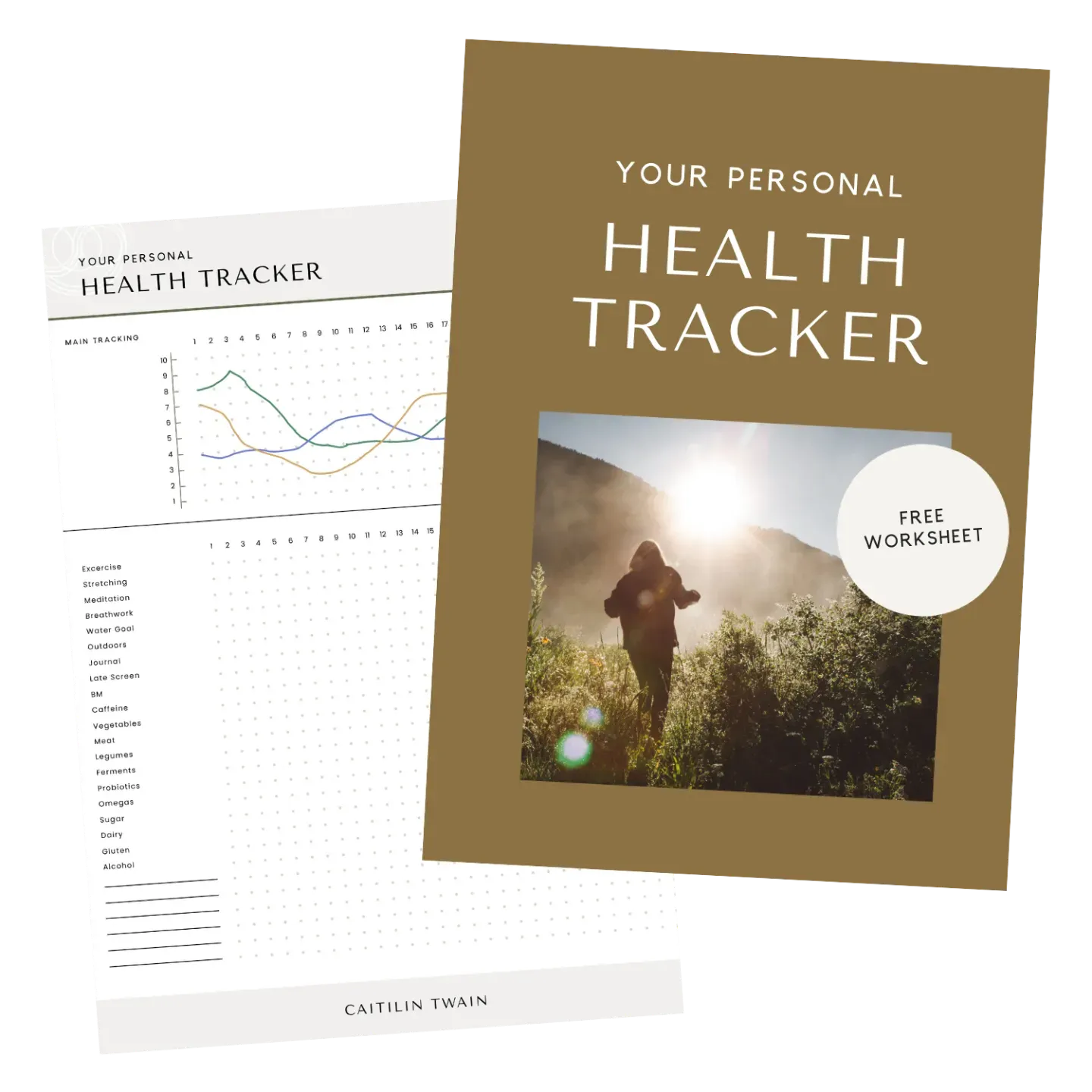
If this idea resonates with you, you can start to track your health using my simple system that helps you notice patterns instead of guessing.
It’s the same system that helped me:
- reverse thyroid nodules
- stay Lyme-free for more than eight years
- restore energy and resilience
- and develop the five pillars of the C.Twain Method
For those of you who feel overwhelmed by the implementation or simply have no time, I offer a concierge level of coaching that includes all the heavy lifting around tracking. You simply wear the tech of your choice, answer a few questions a day, and I take care of the rest.
Because real healing doesn’t begin when experts finally agree.
It begins the moment you start listening to the opinion of the best authority: your OWN body.
References
- Earlier this year, the U.S. government released the 2025–2030 Dietary Guidelines, as outlined by the U.S. Department of Health and Human Services, bringing back a concept many people thought was gone: the food pyramid.
- University of Arizona Cooperative Extension. The New Food Pyramid Explained. (AgLife & Environmental Sciences College)
- Harvard T.H. Chan School of Public Health. Dietary Guidelines for Americans 2025–2030.(The Nutrition Source)
- The White House. Promoting the National Defense by Ensuring an Adequate Supply of Elemental Phosphorus and Glyphosate-Based Herbicides.(The White House)
- Chemical & Engineering News. Trump Orders More Domestic Phosphorus, Glyphosate Production.(Chemical & Engineering News)
Associated Press. New Dietary Guidelines Emphasize Whole Foods and Protein.(AP News)
Author