Beyond the Biomarkers: A Different Kind of Longevity Audit
Sep 01, 2026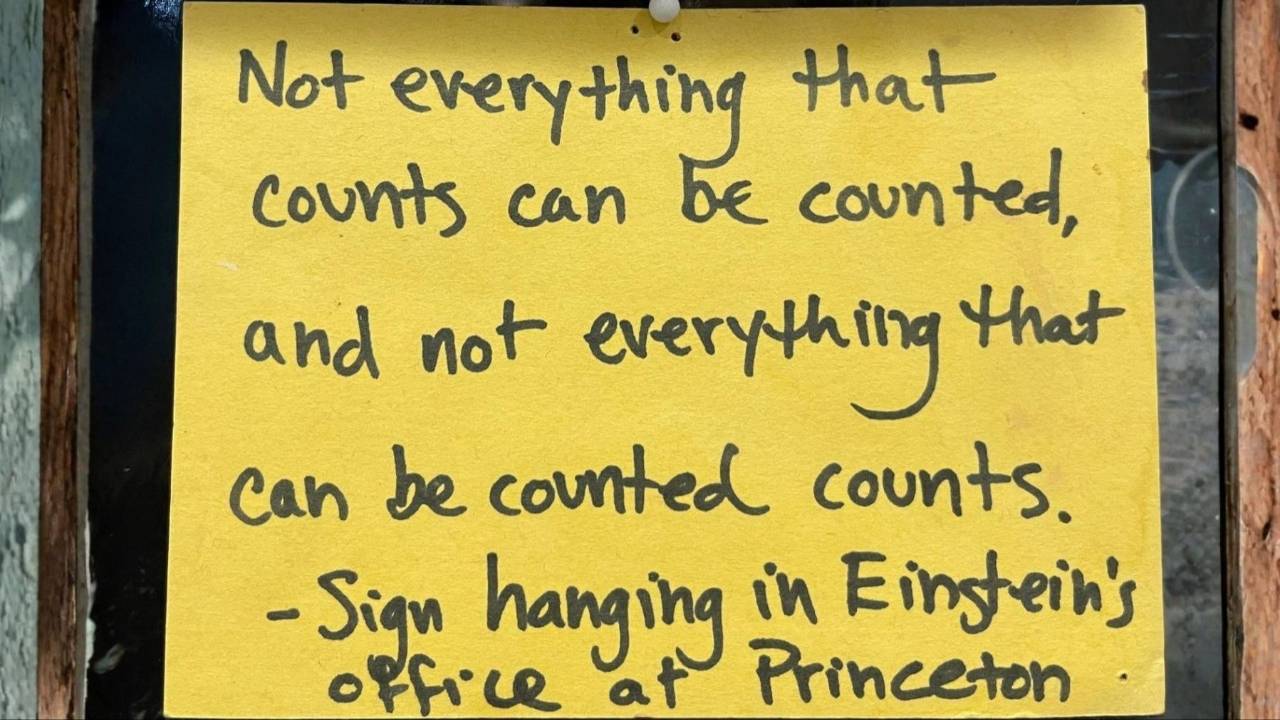
Years ago, when my son was becoming a promising young scientist, I made a little sign for the corkboard above his desk.
“Not everything that counts can be counted, and not everything that can be counted counts.” - Sign hanging in Einstein’s office at Princeton.
And after spending the past several months measuring just about everything I could as part of my 55th Birthday Longevity Audit - blood markers, body composition, bone density, cardiovascular risk, inflammation, sleep and more - I keep coming back to that sign.
I believe deeply in data. I use it in my own life and in my work with clients because measuring something can reveal risk, challenge assumptions and give us information we can actually act on.
But there’s a danger in becoming so enamored with what we can measure that we begin to get confused about everything that matters.
Because some of the factors most consistently associated with how well - and sometimes how long - we live may never appear on a standard lab report.
Do you have people who really know you?
Do you feel that you belong?
Do you have a reason to get up in the morning?
Does your life feel meaningful?
Do you feel connected to something larger than yourself?
These aren't consolation prizes for people who don't know their ApoB.
Increasingly, science suggests they belong in the longevity conversation too.
How is your life doing?
One of the clearest examples is human connection.
In 2023, researchers published a systematic review and meta-analysis of 90 prospective studies involving more than 2.2 million people. Social isolation was associated with a 32% higher risk of death from all causes. Loneliness was associated with a 14% higher risk.
Those numbers are significant. But the distinction between isolation and loneliness may be even more useful.
Social isolation is relatively objective: How much contact do you have with other people? How large is your social network? How often do you interact?
Loneliness is subjective.
You can spend enormous amounts of time alone and feel perfectly content. You can also be married, have children, work with people all day, scroll through hundreds of “friends” online…….and feel profoundly alone.
So perhaps the useful longevity question isn't simply:
How many people are in my life?
It's:
Do I feel known? Do I belong? Is there someone I can call when things fall apart? Is there someone I can celebrate with when things go right?
And I would add another question:
Who needs me?
We talk a great deal about making sure older adults have support. We should. But human beings don't only need to be cared for. We also need opportunities to care, contribute, teach, mentor, create, help, participate and matter to someone besides ourselves.
That brings us to purpose.
You don't need to find your “purpose”
Purpose has become one of those words that can make perfectly normal people feel as though they're failing at life.
What is my purpose?
As though somewhere out there is one magnificent calling we were supposed to discover, preferably before breakfast.
The research is more interesting, and much more forgiving.
A 2026 meta-analysis brought together 25 samples involving nearly 489,000 people, almost 49,000 deaths and as much as 32 years of follow-up. Higher purpose in life was associated with approximately 30% lower mortality risk in the primary analysis. The association became smaller after researchers accounted for factors such as health behaviors, clinical risks and depression, but it remained significant.
That doesn't prove that finding a purpose will make you live longer. Observational research can't tell us that.
But it does tell us that purpose deserves our attention.
And purpose doesn't have to mean changing the world.
It might mean helping with a grandchild. Teaching. Building something. Caring for an animal. Making art. Volunteering. Tending a garden. Having a project you want to finish.
Sometimes, purpose is simply knowing that your absence would be noticed.
Who needs you? That's a particularly important question as we age, when children leaving home, retirement, physical limitations, or other changes can quietly remove roles that once gave our days structure and meaning.
A life worth living
Purpose isn't the same thing as joy.
You can have an extraordinarily purposeful life and not particularly enjoy it. When we talk about extending healthspan, I think we also have to ask what we're hoping to do with it.
What brings you joy, and how often is it actually present in your life?
Not performative gratitude. Not pretending everything is wonderful when it isn't.
Joy can coexist with illness.
It can coexist with grief.
It can sit right next to fear, uncertainty and sorrow.
I'm talking about the things that make being alive interesting: music, humor, beauty, play, sex, creativity, good food, curiosity, nature, conversation, adventure, learning, laughing so hard you can't breathe.
Research on positive affect in older adults suggests this territory isn't frivolous either. Greater positive affect has been associated with lower mortality risk, although association doesn't establish that happiness itself causes a longer life.
And anticipation matters here too.
Can you imagine something ahead that you genuinely want to experience? That's different from believing everything will turn out well. Optimism doesn't have to mean “everything will be fine.”
Sometimes it simply means believing there's still something worth moving toward.
Intimacy counts
There's another part of connection that longevity conversations often tiptoe around, particularly when we're talking about older adults.
Intimacy.
I don't mean only sex, although I absolutely mean sex too.
I mean affection. Touch. Vulnerability. Emotional closeness. Partnership. Being known. Feeling wanted. Feeling desired.
We spend plenty of time talking about whether older people are getting enough protein and resistance training. Somehow we're considerably less comfortable asking whether they're being touched.
That strikes me as an odd omission from a conversation supposedly concerned with quality of life.
Research on sexuality and aging is much stronger around well-being and quality of life than around longevity itself. A systematic review examining sexual health and subjective well-being across midlife and older age found meaningful associations between sexual health and well-being.
So I'm not going to tell you that having more sex will make you live longer.
I am going to argue that a longer life in which we quietly erase intimacy isn't necessarily the version of healthy aging we should be aspiring to.
Something larger than ourselves
I also believe spirituality belongs in the conversation. And by spirituality, I don't necessarily mean religion.
For one person, spirituality may mean organized faith. For another, it may be meditation, nature, ritual, service, awe, or a deeply held sense of meaning or connection to something larger than themselves.
And awe itself is fascinating.
Psychologists generally describe awe as the feeling we experience in the presence of something vast enough to challenge our normal frame of reference.
A mountain can do it.
A night sky.
Birth.
Extraordinary human goodness.
Researchers once asked 60 older adults to take weekly 15-minute walks for eight weeks. Half were simply told to walk. The others were encouraged to seek experiences of awe - to notice vastness and wonder in the world around them.
The “awe walkers” reported greater prosocial positive emotions during their walks and less daily distress over time.
But my favorite part involved their photographs.
Participants took pictures of themselves during their walks. Over time, the people in the awe group began taking up less space in their own photographs while the world around them took up more.
The researchers called it the “small self.”
I love that.
Not making ourselves insignificant, but remembering that we're part of something larger. Maybe there's a wonderfully simple practice hiding in there: Go outside and notice something bigger than you.
And then there's agency
There's one more dimension of health that I think we dramatically underestimate.
Do you believe you have some influence over what happens next?
Not control, but agency.
Those are different things. Control says: I can determine what happens. Agency says: I can participate meaningfully in what happens next.
There are plenty of things about our health that we can't control. We get diagnoses we didn't ask for. A tough roll of the genetics dice. Bodies change. Accidents happen. Treatments fail. Life doesn't reliably reward us for doing everything “right.”
Agency doesn't deny any of that. It asks what remains possible within it.
Healthcare researchers sometimes use the term patient activation to describe a person's knowledge, skills and confidence in managing their own health and healthcare. Research has linked greater patient activation with better self-management and a range of health outcomes, although the evidence around which clinical outcomes reliably improve is still evolving.
I think about this constantly in my work.
A physician may understand medicine.
A physical therapist may understand rehabilitation.
A nutrition professional may understand nutrition.
A therapist may understand psychology.
A coach may understand behavior change.
We need expertise. Sometimes we desperately need it.
But the patient is the only person who lives inside the system everyone else is trying to understand.
You know what happened after you took the medication. You know whether the pain changed when you moved differently. You know what happened during the six days between appointments. You know which changes make you feel more like yourself again.
That doesn't make you the medical expert. It makes you an essential member of the team.
In my mind, you're the driver of the bus.
Being the driver doesn't mean ignoring the people with maps, expertise and experience. A smart driver wants excellent information and excellent people around them.
But you don't hand everyone else the steering wheel and climb into the luggage compartment.
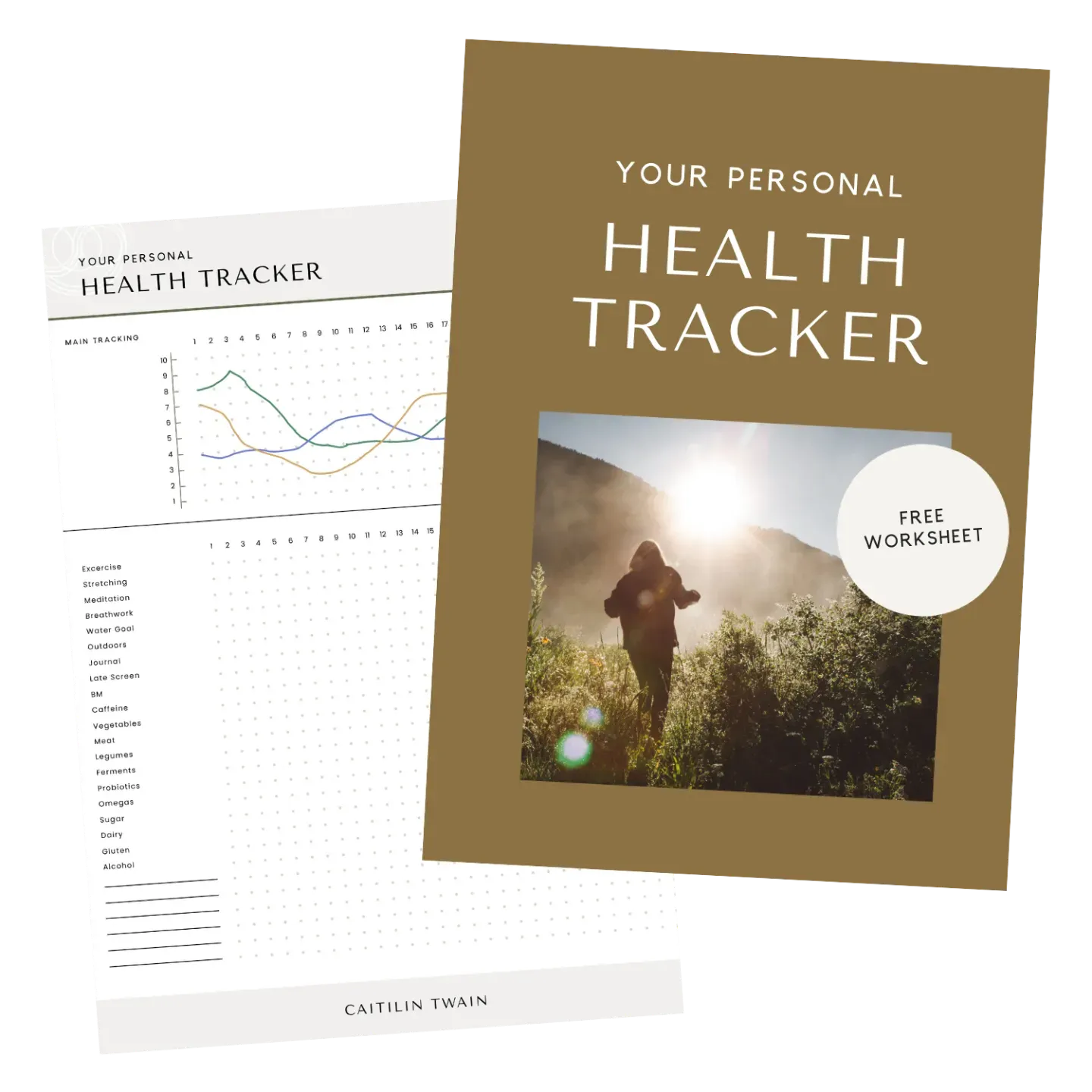
And this is also why I'm such a believer in tracking.
Not tracking as surveillance. Not tracking as another opportunity to decide whether you were “good” today.
Tracking as noticing.
What happens to my sleep when I exercise late? What happens to my pain when I'm stressed? Does this food actually make me feel better? What gives me energy? What drains it?
When we record small observations over time, patterns become visible that are remarkably difficult to see when we're relying on memory alone.
I think of this as compassionate tracking : gathering information with curiosity rather than judgment.
Data doesn't replace intuition. It refines it.
That's why I made my Health Tracker free and accessible to everyone. It takes less than two minutes a day, but those tiny moments of attention can help us become better observers of our own lived experience.
And that, to me, is agency: Learning to pay attention to ourselves, and then using what we notice to make better choices.
The goal isn't a stress-free life
Stress is often treated as though it's another toxin we're supposed to eliminate.
Good luck with that!
Being alive is stressful.
Love is stressful. Parenting is stressful. Work is stressful. Change is stressful. Exercise is stress. Caring deeply about anything exposes us to stress.
The question isn't whether stress happens.
It's what happens after it happens.
The goal isn't a stress-free life. It's a body that knows how to come back from stress.
Our bodies are built to mobilize in response to challenge. Problems arise when those systems are repeatedly activated without sufficient recovery, and when stress becomes chronic and physiological wear accumulates.
And this is where all of these supposedly separate parts of longevity begin running into one another again -
The person you call when you're overwhelmed may help buffer stress.
A sense of purpose may help you tolerate difficulty.
Spiritual practice may create perspective.
Joy may give the nervous system moments of reprieve.
Agency may help transform I'm trapped into What can I do next?
None of these makes us invulnerable, but they may help us recover.
And resilience, as I understand it, isn't never being knocked off balance. It's having some capacity to find our way back.
My Eleventh Longevity Audit
So after ten rounds of labs, scans, devices, measurements and numbers, I've decided my Longevity Audit needs one more category.
Except this one doesn't require a laboratory.
Consider it a Life Audit. Don't score it. Don't turn it into another spreadsheet. Just sit with the questions.
Do I have people who really know me?
Do I feel that I belong?
Who needs me?
Do I contribute something that matters to me?
Is there intimacy in my life?
What brings me joy, and how often do I actually experience it?
Do I encounter beauty, wonder, play or awe?
Does my life feel meaningful?
Do I feel connected to something larger than myself?
Can I imagine things ahead that I'm excited to experience?
Do I believe my choices still matter?
When life inevitably knocks me off balance, can I find my way back?
I am absolutely not suggesting that we stop measuring what can be measured.
I want to know my numbers. I want you to know yours.
Knowing my numbers has helped me identify risks, ask better questions, make changes and decide what deserves my attention next.
Knowledge isn't valuable because it gives us a grade. It's valuable because it gives us choices.
What I'm really advocating for is a more expansive kind of attention.
Track your sleep, symptoms, glucose, HRV or habits if that information helps you understand yourself better.
But also notice your joy.
Notice connection.
Notice what happens in your body when you're stressed - and just as importantly, and what helps you come back.
Notice awe. Energy. Intimacy. Meaning.
Notice which people leave you feeling more alive.
Notice what you look forward to. What makes you laugh. What makes you feel useful.
Notice what makes you want more of this life.
In other words - measure more intelligently. Notice more expansively.
Because the goal isn't to turn ourselves into collections of data points.
The goal is to become better observers of our own lives.
And perhaps that's the real lesson I've taken from this entire Longevity Audit.
Some of what matters can be measured precisely.
Some of it can only be noticed.
All of it can teach us something - if we're paying attention.
We're spending extraordinary amounts of money and ingenuity trying to extend human life. Perhaps we should also be asking what makes us want more of it.
And this is one audit I don't want to conduct alone. So tell me -
What have I missed? What do you believe is essential to a life well-lived?
I really want to know.
Frequently Asked Questions
What does social connection have to do with longevity?
Large prospective studies have found that both social isolation and loneliness are associated with higher mortality risk. They aren't the same thing: isolation describes the amount of social contact we have, while loneliness describes how connected we feel. Relationship quality, belonging and feeling known matter too.
Does having a sense of purpose help you live longer?
Research consistently associates greater purpose in life with lower mortality risk. That doesn't prove purpose itself causes longer life, but it does suggest that purpose belongs in the healthy-aging conversation.
And purpose doesn't require one grand calling. Being needed, contributing, caring, creating, mentoring or simply having something worth getting up for can all give life direction.
What is patient activation?
Patient activation refers to the knowledge, skills and confidence a person has to participate in managing their own health and healthcare.
Being an active participant doesn't mean rejecting medical expertise or diagnosing yourself. It means observing what's happening, asking questions, participating in decisions, implementing recommendations and providing feedback when something isn't working.
What is an awe walk?
An awe walk is simply a walk taken with deliberate attention to wonder, vastness and things larger than ourselves.
In one eight-week study of older adults, participants assigned to weekly 15-minute awe walks experienced changes in positive emotions and daily distress. Their photographs also changed: over time, they tended to occupy less of the picture while their surroundings occupied more.
You don't need a national park.
Look up.
Pay attention.
Notice something bigger than you.
Related Articles
Inflammation: The Longevity Metric Hiding Inside All the Others
Editing Your Life: Aligning Body, Mind and Purpose
Why Mindset Comes First in Healing and Recovery
Sexual Vitality Is a Reflection of Health
Self-Love, Not Perfection, Is What Heals You
Is the Pain of Not Changing Greater Than the Pain of Changing?
Author