Grip Strength Is One of the Best Predictors of How Long You'll Live
May 29, 2026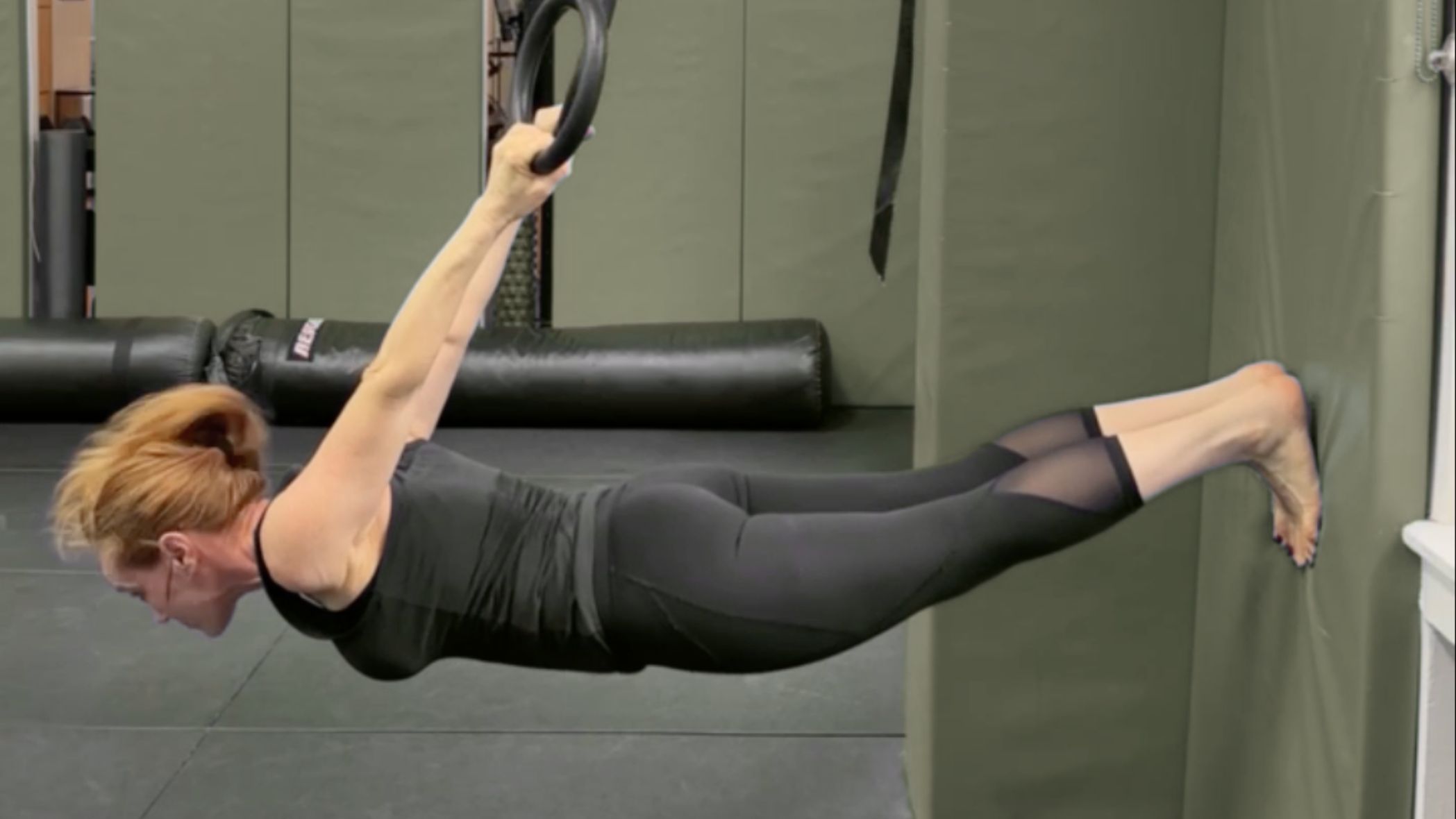
Part of a Longevity Metrics Series: Auditing My Health as I Turn 55
My birthday is June 19th. And as it approaches, I'm doing something I've been doing for decades before I take my next turn around the sun: auditing myself.
Not in a punishing, what's-wrong-with-me way. More like a CEO looking at the books before the new fiscal year. I want to know where I actually stand, give myself credit where it's due, identify what can be improved, then make realistic goals to do that.
Because I'm turning 55, I feel a bit like I've entered the freshman class of the Crone Academy. I'm excited about this time, and I want to make sure that I stay strong, totally self-sufficient, and mentally sharp for the next half of my life. That's why this birthday, my audit is going to be across ten health metrics predictive of longevity. Then I want to use the next year, from 55 to 56, to move the needle on the ones that need it.
This week: grip strength.
Why Grip Strength Is Getting Serious Attention
Grip strength has quietly climbed from a gym novelty to one of the most studied biomarkers in longevity medicine. For good reason.
A meta-analysis of 42 studies covering over three million participants found that every 5 kg decrease in grip strength is associated with a 16% higher risk of all-cause mortality and a 21% higher risk of cardiovascular mortality, independent of age, sex, lifestyle, and other health factors. That's not a small signal. That's a significant one.
What made researchers sit up and take notice is that grip strength turned out to be a more powerful predictor of cardiovascular mortality than systolic blood pressure. The thing we measure at every single doctor's visit. Grip strength beat it.
Why? Because your hands tell a deeper story. Grip strength is a proxy for your overall neuromuscular health: muscle mass, nerve function, metabolic efficiency, and cardiovascular function, all rolled into one squeeze. When those systems are declining, grip strength tends to go with them. It's an early warning signal that most of us never check.
The clinical term for the progressive loss of muscle mass and strength with age is sarcopenia, and grip strength is one of its primary diagnostic markers. We start losing muscle mass in our 30s and the rate accelerates after 50. Reduced muscle mass leads to reduced physical activity, which leads to reduced cardiovascular function, insulin resistance, and ultimately loss of independence.
Grip strength is, in short, a window into all of that.
The Problem: I Think Dead Hangs Are Incredibly Boring
The most common prescription for improving grip strength is the dead hang: grab a bar, hang, and wait. Somewhere between 30 seconds and two minutes, ideally.
And look, I'm not saying it doesn't work. It does. But I find it phenomenally dull.
I've always been drawn to movement that ticks multiple boxes at once. If I'm spending time on something, I want it to be doing more than one job. Dead hangs feel like waiting for a bus. You're just... there.
I appreciate that my spine is being tractioned and I can get some shoulder stretching, but as a hypermobile person, that’s not necessarily a good thing on repeat.
So I went looking for a better option.
My Answer: Gymnastic Rings
Gymnastic rings have become one of my most-used training tools, and this is exactly why.
Watch what's happening in this video. I'm clocking around 90 seconds of grip time. But that's almost beside the point. Here's what's also going on:
Inversions. Going upside down changes the orientation of your joints, your blood flow, your proprioception. It's decompressing, disorienting in the best way, and demands full-body tension.
Deep forward folds and backbends. These are full spinal articulations, the kind most people haven't done since childhood. The spine loves to flex and extend. We just stopped letting it.
Trapezius stretch. That chronic upper back tightness so many of us carry? The rings let me get into a genuine, loaded stretch of the trapezius in a way that sitting in a stretch simply can't match. The load makes it delicious.
Shoulder joint work across multiple ranges of motion. This is the part I want you to notice most. The rings are unstable. They move with you, which means your shoulder stabilizers have to work constantly. Research on gymnastic ring training shows that the instability specifically strengthens the rotator cuff and the smaller stabilizing muscles that conventional pressing and pulling exercises often miss. Your shoulders go through overhead, behind, rotated, loaded: positions they were designed for and rarely get. Healthy shoulder joints need diverse inputs. Rings deliver.
Abs. Genuine, functional core work happens when your body is suspended and you're moving against gravity at odd angles. Not a crunch in sight, but my core is working the entire time, and then in overtime at the end when I make myself into a little rocking ball. Pre-shoulder injury, I used to tap toes to the floor front and back - next year I’d like to get that ability back.
And throughout all of it: grip strength. One minute plus of unbroken work, layered into movement that's actually engaging.
But What If Rings Aren't Accessible to You?
I recognize that my range of motion isn't where everyone is starting. And gymnastic rings aren't standard equipment at most gyms or parks.
Here's what I want you to know: you don't need any of that to start.
A pull-up bar (the kind you'll find at almost any playground) is enough to begin building real grip strength while getting solid shoulder and core work in.
Moves I love for this:
Scapula glides in different planes.
In the video above, I'm hanging from the bar with straight arms and moving my shoulder blades towards each other while arching my back and lifting my heart to the sky, then moving my shoulder blades away from each other and contracting my front core. No bending the elbows, just the shoulder blades moving up and down.
In the video below, I'm using some different muscles by pulling myself up and over to one side, then the other.
Hanging crunches. From a dead hang, draw your knees toward your chest. You can also hold your legs straight and lift them up. The grip work stays constant. The core gets involved. You're multitasking. Which is exactly the point.
Start with 10-20 seconds if you're new to hanging. Work toward 45 seconds to a minute. The adaptation is quick once you commit to it.
Where I Am, Where I'm Going
When I audited my own grip strength as part of this pre-birthday review, I was glad to find it's a relative strength of mine. Regular ring work will do that. But I'm taking nothing for granted. Grip strength isn't something you bank; it's something you maintain.
If you haven't tested yours recently, that's worth thinking about. And if the last time you challenged your grip was a handshake, it's probably time to hang from something.
The birthday approaches. The audit continues.
More metrics coming. Subscribe to the newsletter if you want them delivered straight to you.
Ready to work on your longevity with personalized guidance? My concierge coaching program is built around you specifically: your body, your history, your goals. If going through your own longevity metric audit and building a movement practice around the results sounds like what you need, that's exactly the kind of work we can do together. Learn more here.
Frequently Asked Questions
How do I test my grip strength at home?
The most accurate way is with a hand dynamometer, which you can find inexpensively online. But you don't need equipment to get a rough read: time how long you can hold a dead hang from a bar. Less than 20 seconds suggests room to grow. 45 seconds to a minute is solid for most adults. Over 90 seconds is genuinely strong.
What counts as a good grip strength score?
It varies by sex, age, and body size. General benchmarks for adults: for women, 30-40 lbs (13-18 kg) on a dynamometer is average; for men, 70-90 lbs (32-40 kg). These numbers decline with age, which is why starting to build now matters. Your goal isn't to hit a number on a chart; it's to maintain or improve from wherever you are this year.
Can I work on grip strength if I have wrist or elbow issues?
Sometimes, but it depends entirely on the issue. Certain wrist and elbow conditions are aggravated by hanging; others actually improve with gentle loading. If you have any injury history there, get cleared by someone who can assess your specific situation before loading those joints. I'd rather you start six weeks later than sideline yourself for six months.
How often do I need to train grip strength?
Two to three times a week is plenty for most people, especially if you're incorporating it the way I do: woven into movement that's also doing other things. Picking up heavy weights builds grip strength. You don't need a dedicated grip workout. You need consistent exposure.
What if I can't hang at all yet?
Start with a towel wrapped around a dumbbell or a water jug handle, and simply hold it for time. Progress from there. The capacity to hang builds faster than most people expect
Sources:
- Meta-analysis of grip strength and all-cause mortality: 42 studies, 3M+ participants (NCBI PMC)
- Grip strength vs. systolic blood pressure as cardiovascular mortality predictor (Lancet)
- Hand grip strength as a proposed new vital sign of health: a narrative review (NCBI PMC)
Author