Frozen Shoulder: Causes and a Whole-Body Approach to Relief
Oct 20, 2026
Frozen shoulder can feel incredibly local. Your shoulder hurts. Your range of motion disappears.
But the shoulder doesn’t function in isolation.
It’s connected to the rib cage, spine, pelvis, hips, and arms. It exists within a metabolic and inflammatory environment. It’s influenced by your nervous system. And for many women, shoulder problems are also showing up during the transition of perimenopause and menopause.
So it’s rare we have one tidy explanation for our shoulder problems.
But the more you understand, the better questions you can ask.
And better questions are often where recovery begins.
“You Remember It’s My Shoulder That Hurts, Right?”
A client once stopped me during a first session while I was assessing the flexibility of his hips.
“You remember it’s my shoulder that hurts, right?”
Fair question.
I hadn’t adequately explained why I was looking so far away from the place he felt pain.
I’ve trained with Tom Myers and studied his Anatomy Trains model for decades, and his work has an enormous influence on the way I see and work with bodies. I don’t look at a painful anything - whether it's a shoulder, knee, wrist, or back - as an isolated part. I look at where it sits within the larger system, then follow those connections as far as I need to understand where a restriction, compensation, or pain pattern may be coming from.
That’s the lens I want to give you in this article.
You don’t need an anatomy degree. But knowing enough about the structures involved, and how they connect to the rest of you, can help you become a much more informed member of your own healing team.
First, What Exactly Is a Frozen Shoulder?
You wake up one morning and your shoulder feels a little stiff.
Then reaching into a cabinet gets harder. Putting on a coat hurts. Reaching behind you becomes almost impossible. Sleeping on that side may wake you up.
Eventually, the shoulder can feel as though it’s simply stopped moving.
That’s why adhesive capsulitis earned its more familiar name: frozen shoulder.
If You Want to Have Informed Discussions With Your Medical Team, You Need to Know Some Basic Anatomy
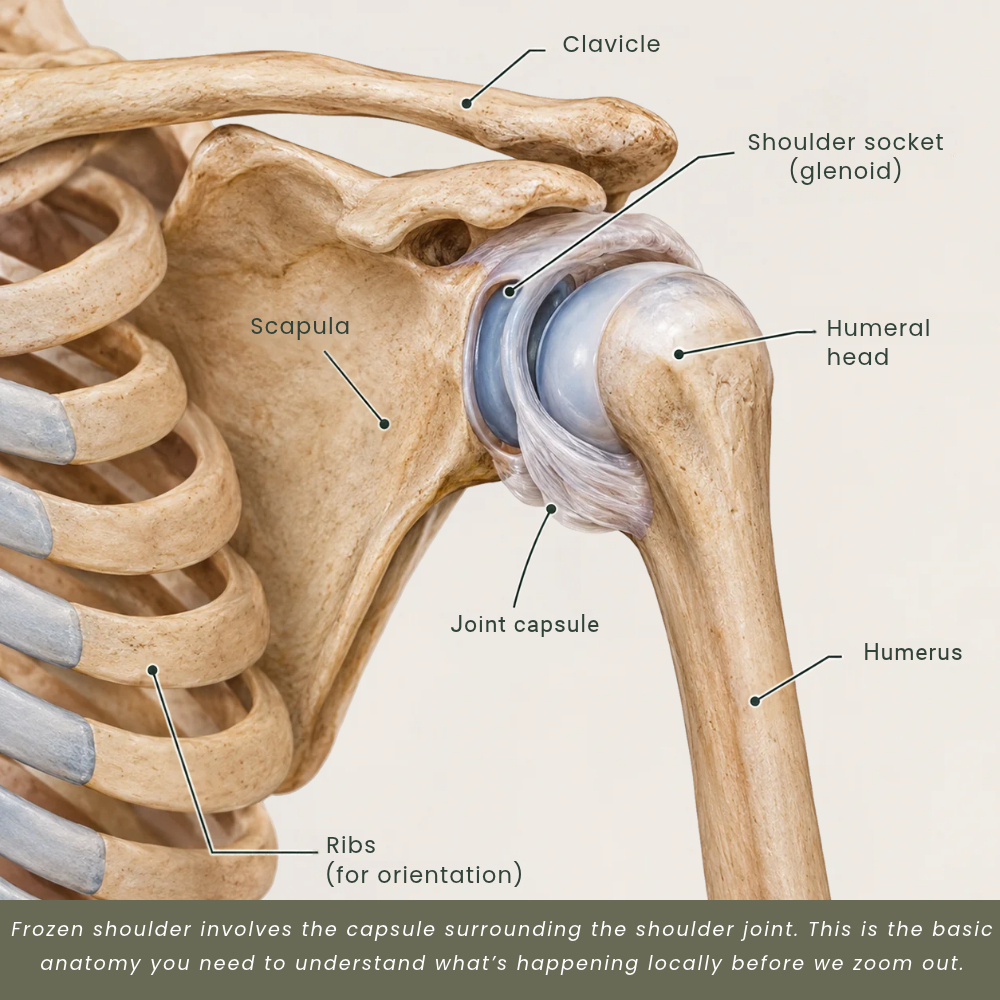
Your shoulder joint is formed where the rounded head of the upper arm bone, the humerus, meets the shallow socket of the scapula, or shoulder blade.
The clavicle, or collarbone, connects the shoulder complex to the front of the rib cage.
Around the joint is a capsule of connective tissue that helps provide stability while still allowing the enormous range of motion we expect from our shoulders.
With adhesive capsulitis, that capsule becomes painful, inflamed, thickened, and increasingly restricted.
The classic pattern tends to involve both pain and a progressive loss of active and passive range of motion.
In other words, you can’t move the shoulder normally, and someone else can’t easily move it normally for you either.
Now Let’s Zoom Out
Traditional anatomy books are incredibly useful for identifying individual muscles and joints.
But bodies don’t move as a collection of isolated parts, because bodies are an integrated system connected through fascia.
Fascia forms a continuous web through and around our muscles, joints, nerves, blood vessels, organs, and other structures, connecting the body from head to toe.
That’s why I tell clients: Where you hurt isn’t necessarily where the problem began.
The latissimus dorsi is a wonderful example.
Most people think of the “lats” as back muscles. But the latissimus attaches directly to the upper arm bone and connects through tissues extending into the low back and pelvis.
Your arm really is connected to your low back.
And that’s just one connection.
Anatomy Trains gives us a way to visualize much larger myofascial relationships throughout the body.
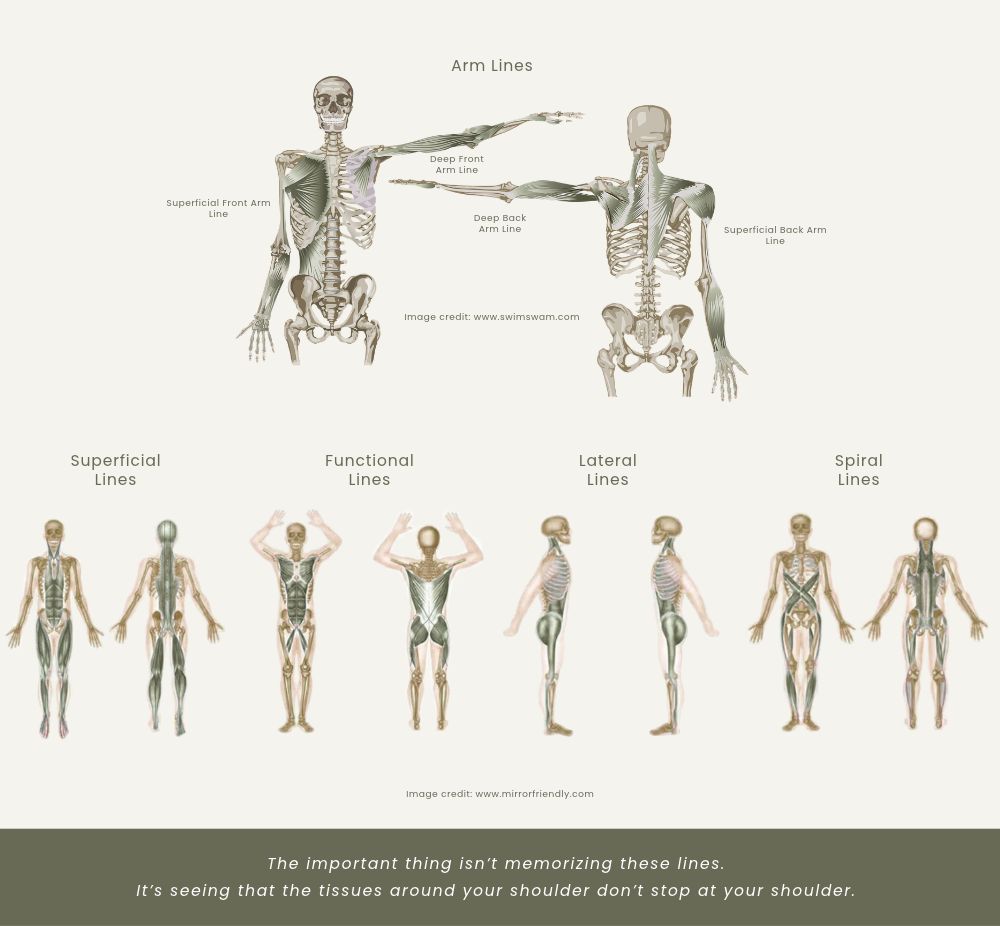
This is what my student couldn’t yet see when he asked why I was looking at his hips.
I wasn’t ignoring his shoulder.
I was following the connections.
If the rib cage isn’t moving well, the thoracic spine is stiff, one hip is restricted, the scapula isn’t moving freely, or tissues farther along the chain are pulling or compensating, the shoulder is working inside that environment.
That doesn’t mean every tight hip causes shoulder pain.
It means I want to know what’s influencing this particular shoulder.
And this is where the anatomy starts becoming useful rather than academic.
Fascia Gives Us Something We Can Work With
Fascia is the connective tissue network that surrounds, runs through, supports, and integrates structures throughout the body.
It’s richly innervated and responsive to movement, loading, injury, inflammation, and time.
When movement becomes restricted, the tissues surrounding the shoulder, and often tissues farther along the chain, stop experiencing their normal range of movement and load.
That’s one reason I use self-myofascial release, or SMFR, so much in my work.
If I find a restricted or painful area along one of those connected pathways, I can explore it.
Not attack it. Explore it and gently release it.
Carefully applied pressure and movement may change sensory input, reduce protective tension, improve body awareness, and make movement more accessible.
This is where the work becomes exploratory, never aggressive.
Self-Myofascial Release: Follow the Chain, Then Re-Test
I’m a certified Roll Model® Method teacher, trained in Jill Miller’s approach to self-myofascial release, and I use Yoga Tune Up® Therapy Balls extensively in my work.
Where I work depends on what I find.
For a shoulder problem, that may include the:
- upper back
- lats
- pectorals
- tissues around the rotator cuff
- deltoids
- biceps
- ribs
- upper trapezius
- posterior shoulder
- thoracic spine
But I may also work farther away if the movement assessment tells me to.
The important part is what happens next:
Re-test.
Can you lift the arm farther?
Does reaching behind you feel different?
That’s information.
And it’s one of the easiest ways to begin learning what may actually be influencing your pain.
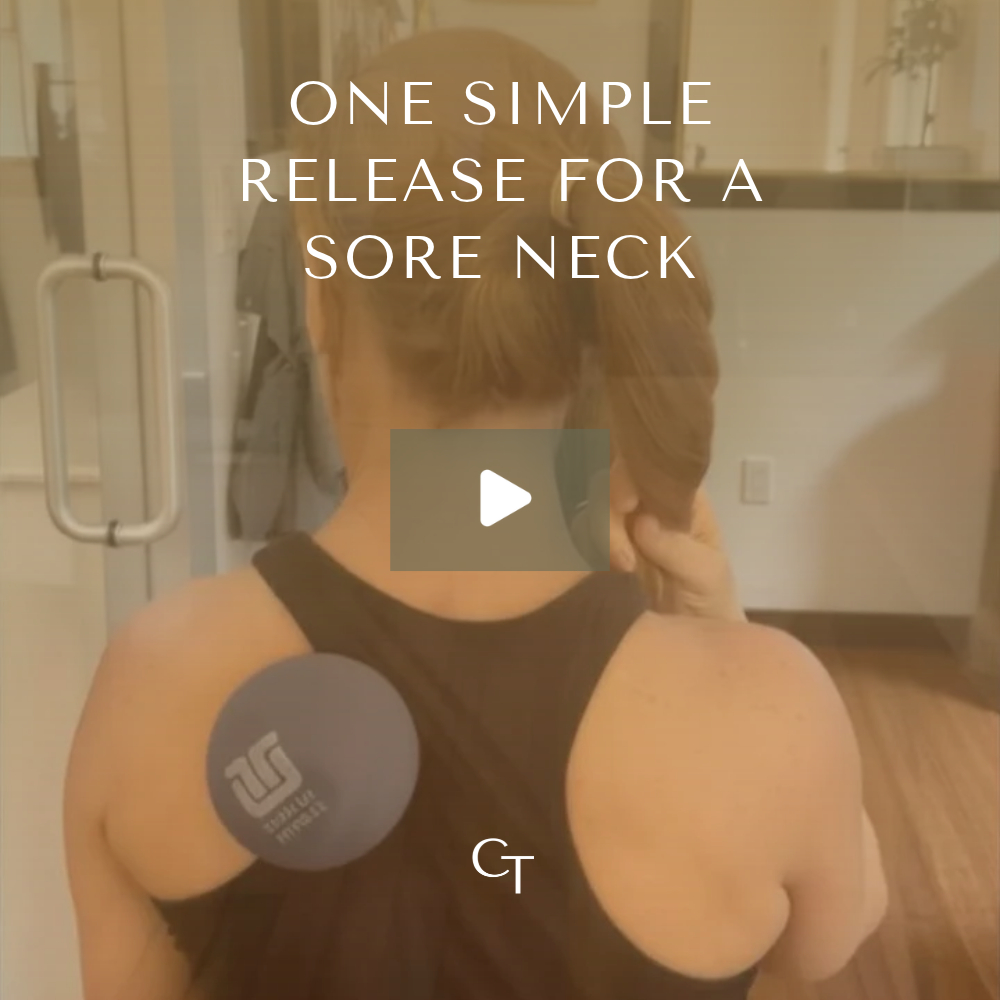
Pro tip: More pressure is rarely better.
The goal is to create a change in sensation or movement, not overpower the tissue.
If you’re too aggressive, the work can become counterproductive.
Staying in a useful zone means you can breathe comfortably and have a normal conversation.
If you find yourself bracing, holding your breath, or unable to speak normally, back way off. Your body is telling you the input is too much.
Excessive pressure can irritate or damage the tissue you’re trying to help.
Pain isn’t proof that the tool is working.
Mobility Alone Isn’t Enough
When a shoulder becomes painful and stiff, the natural instinct is often:
Stretch it.
Then stretch it harder.
Then stretch it even more.
That isn’t always helpful. A shoulder needs mobility and stability.
The muscles leading to the rotator cuff need to contribute to joint control.
The trunk and pelvis need to provide a stable platform.
And eventually, the shoulder needs load.
Strength isn’t the enemy of recovery, but poorly timed or inappropriate loading can be a problem. That's why progressive strength is part of restoring capacity.
So I prefer the question:
What can this shoulder tolerate today, and how do we gradually expand that capacity?
over:
How far can I force it to move?
Want a guided place to start?
If you’d like me to walk you through practical movement and self-care tools for the neck and shoulders, my Neck & Shoulder Pain Relief Mini-Course gives you a structured way to begin working with the area without forcing it.
So far, we’ve been talking mostly about the mechanical and myofascial picture.
But that’s still only part of the story.
Hormones May Be Part of the Picture Too
For years, women have told remarkably similar stories.
Their shoulder began freezing somewhere around perimenopause or menopause.
Sometimes there was an injury.
Often there wasn’t.
Sometimes the usual rehabilitation helped.
Sometimes progress seemed extraordinarily slow.
And some women have reported major improvements after beginning menopausal hormone therapy.
Researchers are starting to see a clearer connection between estrogen and frozen shoulder.
In laboratory studies, estrogen appears to reduce some of the tissue changes that make the shoulder capsule thick, stiff, and difficult to move.
Human studies are beginning to point in the same direction. In a Duke study of nearly 2,000 menopausal women, frozen shoulder occurred in about 4% of women using hormone therapy compared with nearly 8% of women who weren’t. The study was too small for that difference to reach statistical significance.
More recently, a much larger 2026 analysis of nearly 600,000 postmenopausal women found that women who weren’t using hormone therapy had about 27% higher odds of developing frozen shoulder.
That still doesn’t mean low estrogen causes frozen shoulder, or that hormone therapy is a treatment. But the connection is no longer just anecdotal. Research is beginning to suggest that estrogen may be one important part of the picture.
So we need to be precise.
We can’t currently say:
“Low estrogen causes frozen shoulder.”
And we can’t say:
“HRT treats frozen shoulder.”
What we can say is that the overlap between menopause, connective tissue biology, inflammation, and adhesive capsulitis is an important area of emerging research.
Estrogen receptors exist throughout connective tissues, and hormonal transitions can influence collagen metabolism, tendon behavior, muscle, bone, inflammatory signaling, recovery, and tissue remodeling.
For some women, menopause may be an important piece of the picture, but it isn’t the whole picture.
Pain Changes the Nervous System Too
Pain isn’t simply a message coming from damaged tissue.
When something hurts for weeks or months, the nervous system can become increasingly protective.
Muscles guard. Movement gets smaller. Sleep can deteriorate. We start avoiding positions we expect will hurt.
And the brain becomes very good at predicting which movements might be threatening.
That doesn’t mean the pain is imaginary. The pain is real.
It means that restoring movement may also require changing the amount of protection the nervous system thinks is necessary.
That’s where tools such as breathing practices, HeartMath®, gentle mobility, and appropriately dosed movement can become useful.
The goal isn’t to “relax your way out” of frozen shoulder.
It’s to create a physiological environment that supports recovery rather than continually reinforcing protection.
Breathing Is Part of the Shoulder Story
Your shoulder blades move on your rib cage.
Every breath changes the shape of that platform.
Ideally, the abdomen and ribs expand not only forward but sideways and backward with every breath.
If breathing becomes predominantly upper-chest breathing, or the rib cage becomes stiff, the muscles of the neck and upper chest can start doing much more work to help you breathe.
Now those tissues are doing double duty.
They’re helping move and stabilize the shoulder girdle while also assisting with breathing thousands of times a day.
For an already sensitized shoulder, that matters.
There’s a nervous-system relationship here too.
When we’re stressed or hypervigilant, breathing often becomes faster, shallower, and more upper-chest dominant. Then the neck and shoulder muscles work harder. That increased effort becomes part of the sensory information continually feeding back into the nervous system.
It can become a loop.
One way we begin changing that pattern is by restoring healthier breath mechanics, helping the diaphragm and rib cage do more of the movement they were designed to do.
Not enormous breaths. Better breaths.
Comfortable, three-dimensional rib movement.
If this feels foreign or uncomfortable for you, read the The Case for Diaphragmatic Breathing, where I talk you through small repetitions that gradually become a more familiar pattern.
Inflammation and Metabolic Health Matter Too
Frozen shoulder involves inflammatory and fibrotic changes within the joint capsule.
And because adhesive capsulitis has such strong associations with diabetes and thyroid dysfunction, I don’t think it makes sense to ignore the broader metabolic environment.
Depending on the person, I may want to know about GI issues, glucose regulation, thyroid function, sleep, nutrition, movement, recovery, alcohol intake, smoking, and other factors that influence inflammation and tissue health.
That doesn’t mean there’s a special “anti-frozen-shoulder diet.”
It means whole-body physiology matters even when the symptom feels extremely local.
There Usually Isn’t One Answer
By now, you can see why I don’t think frozen shoulder lends itself particularly well to a one-size-fits-all explanation.
It isn’t simply:
“Your posture.”
Or:
“Menopause.”
“Inflammation.”
“Stress.”
“Tight fascia.”
And certainly not:
“You’re getting older.”
The joint matters.
Movement mechanics matter.
The nervous system matters.
Metabolic health may matter.
And for some women, hormonal changes may matter too.
The work is figuring out which of those things matter for you.
So What Should You Do If You Think You Have a Frozen Shoulder?
First, know what you’re dealing with.
Not every painful, stiff shoulder is adhesive capsulitis.
Rotator cuff injuries, arthritis, cervical nerve problems, fractures, instability, and other conditions can present with overlapping symptoms.
A qualified medical professional can help determine whether further evaluation or imaging is appropriate.
And once you know what you’re dealing with, zoom out. Now you're armed with enough big-picture knowledge to start exploring possible causes and fixes.
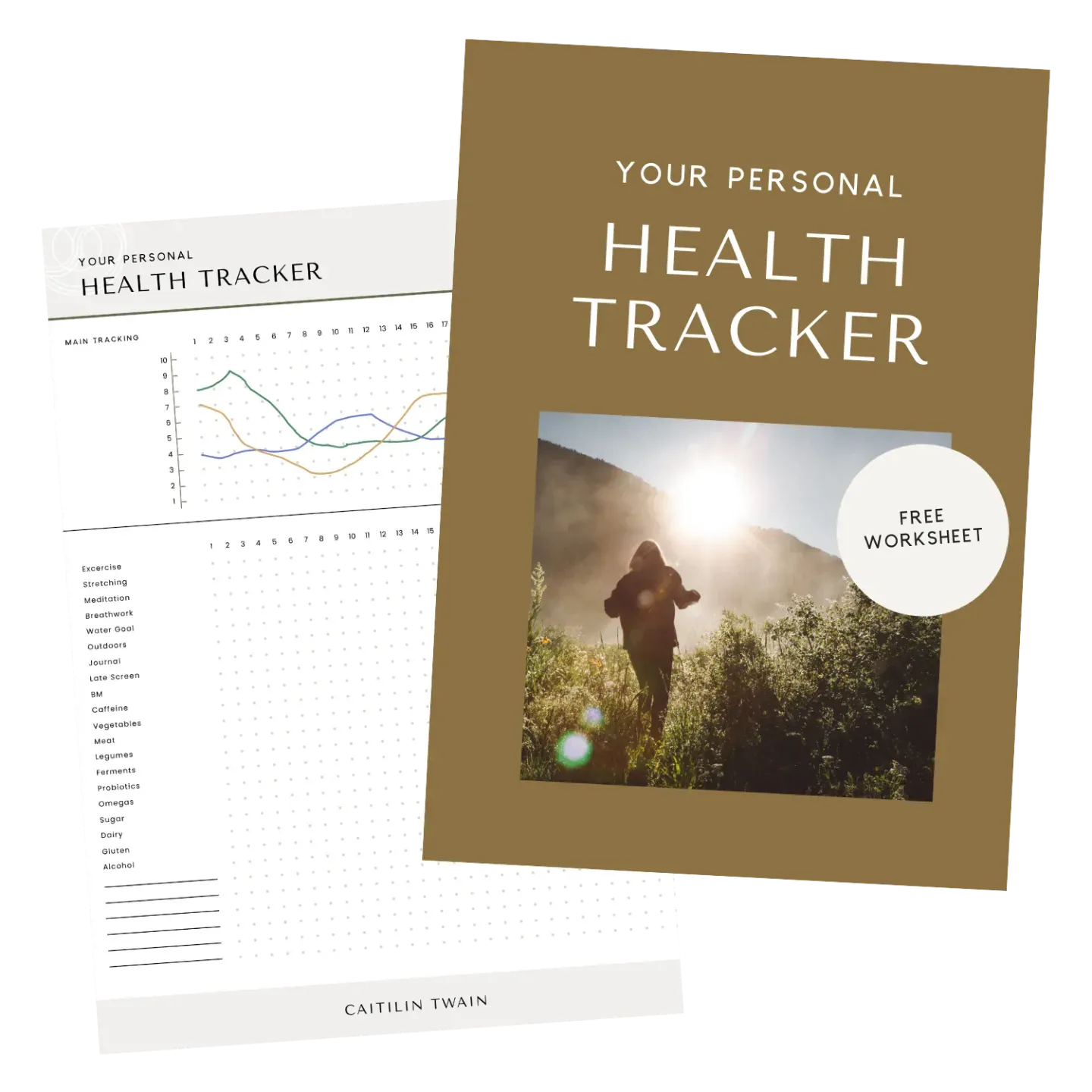
Track What Changes
One of the simplest things you can do is track patterns.
You don’t need to become an anatomy expert, but you can learn a lot from your body by moving slowly and curiously.
Notice:
- Which movements are limited?
- What’s changing week to week?
- Is night pain improving?
- Are some ranges returning before others?
- Does working on the rib cage, lats, or hips change shoulder movement?
- Does gentle myofascial work change how the arm moves?
- How does the shoulder respond after strength work?
- What else changed around the time the shoulder began freezing?
If changing something elsewhere in your body changes what the shoulder can do, that’s useful information.
Of course zoom out even more. Notice: Does stress affect your symptoms? Does sleep affect the next day? When you cut out inflammatory foods, how do you feel?
Trends tell us much more than a single painful day.
Not Sure What’s Driving Your Pain?
If reading this leaves you wondering, “Okay, but what might be influencing my pain?” that’s exactly why I created the Pain Source Quiz.
It can help you start noticing patterns, connecting some of the dots, and figuring out what might be worth exploring next.
At the end of the quiz, I’ll point you toward free resources that can help you start exploring those patterns right away.
Or, if you want my help sorting through the larger picture, you can book a 90-minute Initial Consultation. I'll review your history and assess your body mechanics.Often, people leave that first session with meaningful relief or a much clearer sense of what to do next. Sometimes we need more work, and sometimes I’ll point you toward a different expert. Either way, you’ll leave with a clearer next step.
Author