Knee Pain Is Often Not a Knee Problem
Nov 03, 2026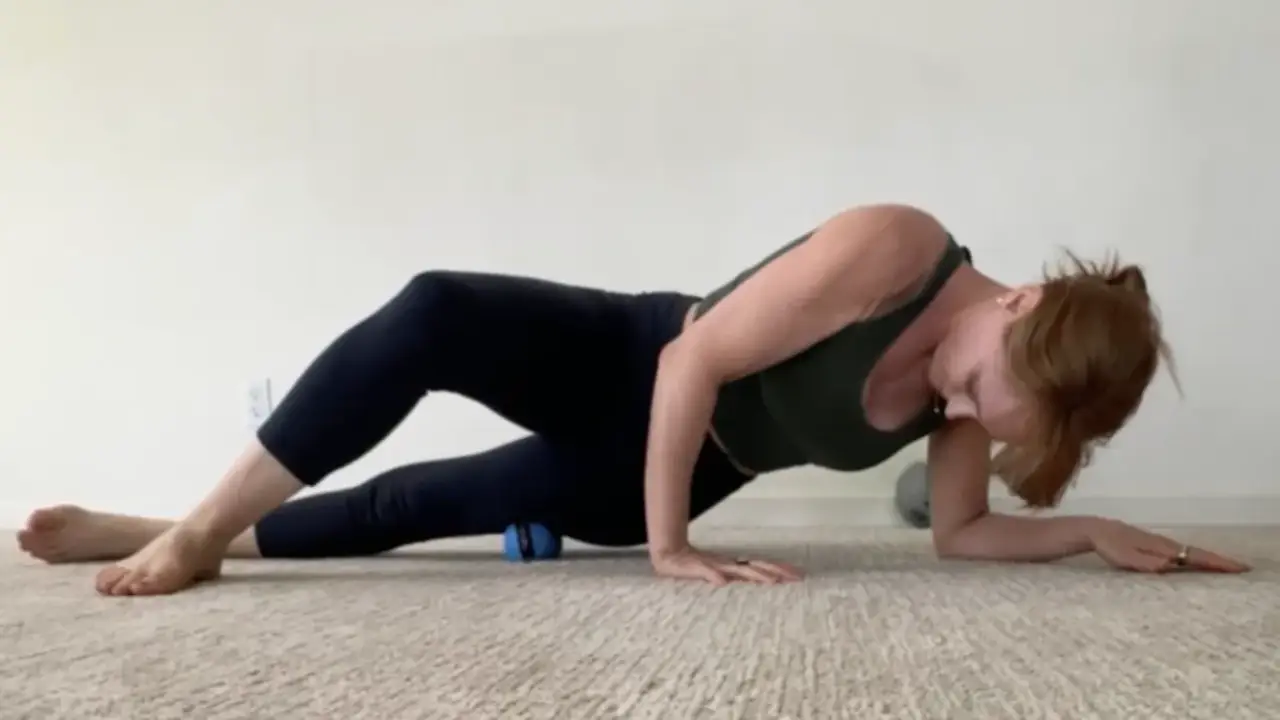
A runner came to me because knee pain had gotten bad enough that he could no longer keep up with his running. Even stretching had become painful.
I started by looking at how he stood, from the front, the sides, and behind. I noticed a curve through his low back, a slight rotation of his hips, and some collapse through both arches. Then I asked him to move.
Where did he feel restricted? Which movements increased the pain? Which made it feel better?
His hips and hamstrings were particularly tight. We used self-myofascial release balls to work directly into his hips, then repeated the movements. Immediately, he had more range of motion through both his hips and his hamstrings. His knee felt moderately better.
We kept going, working through his quads, calves, and quadratus lumborum, a muscle in the lower back.
By the time he left, his knee felt much better. He also understood which areas he needed to work with regularly to support his running.
I didn’t touch his knee.
That’s the part I want you to notice.
His knee was where he felt the pain. But it wasn’t where we needed to work to help him feel relief.
Pain is an alarm, not a GPS.
Over nearly twenty years of teaching movement and working with clients, I’ve repeatedly seen knee pain disappear - often within a single session - after we addressed restrictions above and below the joint. Sometimes that means releasing the hips. Sometimes it means working with the quadriceps or sartorius, the hamstrings, the calves, or even the soles of the feet. Sometimes we need to improve strength and stability as well as mobility.
The place that hurts doesn’t always tell us where to begin.
I don’t stop at asking, “What can we do to this knee?” I want to understand what’s asking too much of it and address that.
First, a quick look at the knee itself
The knee is often described as a hinge joint, but that makes it sound simpler than it is.
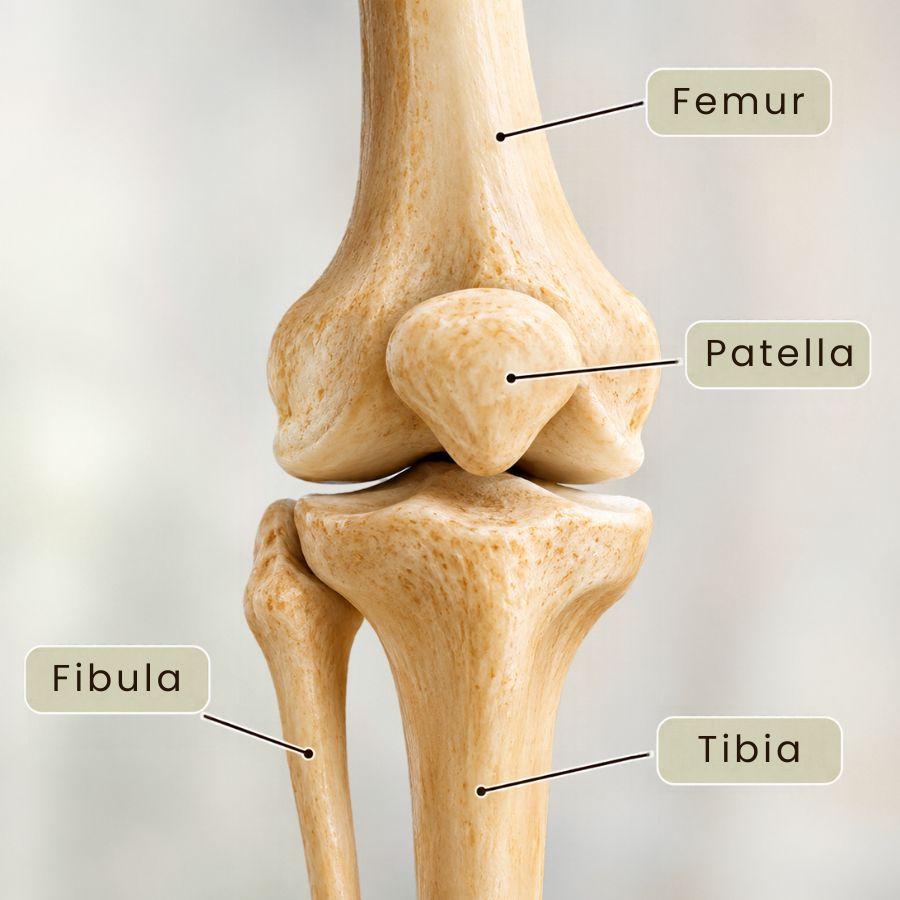
Your femur, or thigh bone, meets your tibia, or shin bone, at the knee. The patella, your kneecap, sits like a shield at the front. The fibula is the smaller bone alongside the tibia on the outside of your lower leg.
Around and within the knee is a brilliant system of ligaments, tendons, muscles, and cartilage that helps support the joint and manage movement.
Because the knee sits between the hip and the foot, it’s constantly responding to what’s happening both above and below it.
If the hip isn’t moving well, the knee may have to absorb more rotation or force. If the foot is collapsing or not distributing weight well, the knee may have to compensate. If the pelvis is rotated, or the muscles and fascia around the hips and legs are excessively tight, that can change how forces travel through the entire leg.
So when someone points to a painful knee, I want to see what’s happening around it.
Now follow the connections
Fascia is the connective tissue network that runs through and around structures throughout your body. Your muscles work within that network, rather than as separate pieces.
I’ve trained with Tom Myers and studied his Anatomy Trains model for decades. His work has had an enormous influence on how I see bodies and follow connections beyond the painful area.
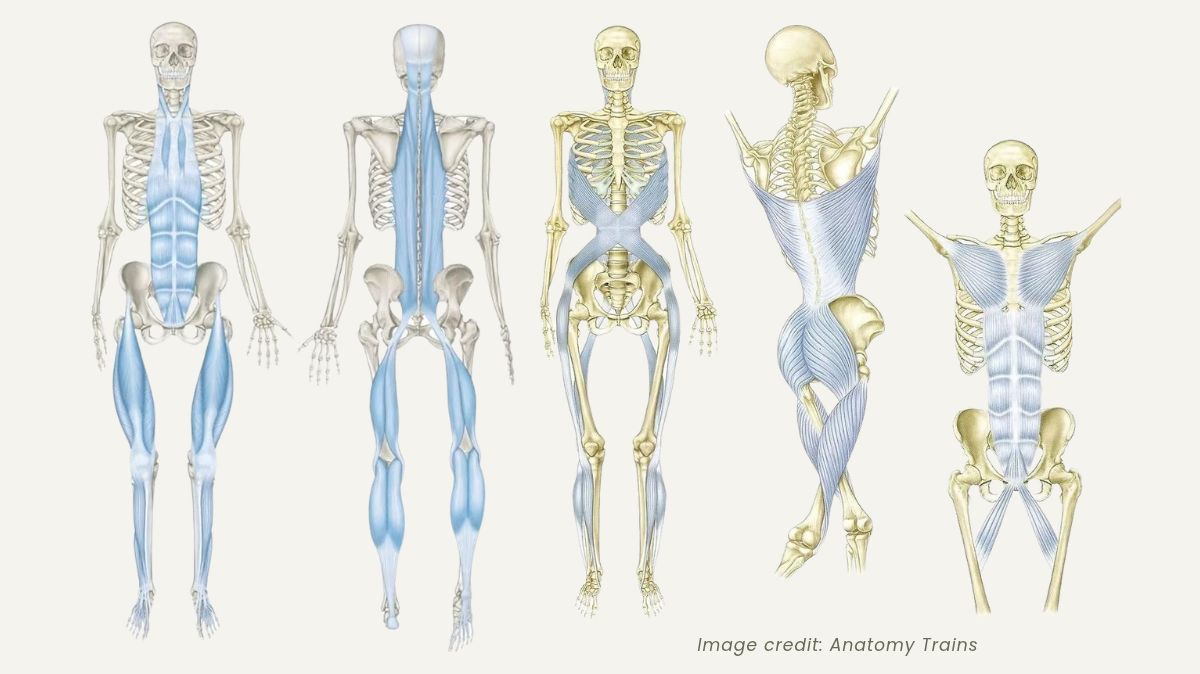
Above it, the hips influence how the thigh moves. The quadriceps at the front of your thigh connect into the tendon system around your kneecap. The sartorius travels from your pelvis across your thigh to the inner upper shin, crossing both the hip and knee.
Below it, the gastrocnemius, one of your calf muscles, crosses both the knee and ankle. Your ankle and foot influence how your feet meet the ground and how you move over them.
That’s why I look at the hips, thighs, calves, and feet, and often continue into the pelvis and lower back. The diagrams help you see those connections. Watching you move and listening to what you feel helps me decide where to explore.
Why I use therapy balls so much for knee pain
When someone has knee pain, the knee often doesn’t want to bend very much.
That matters because many familiar hip and thigh stretches require bending the knee. You may need more freedom through those muscles, but getting into the stretch hurts before you can reach them.
Telling someone to “just stretch more” doesn’t solve that problem.
This is where self-myofascial release, or SMFR can be extremely useful. Therapy balls give us another way to work with tight tissues without forcing the painful knee into a deep bend.
I’m a certified Roll Model® Method teacher, trained in Jill Miller’s approach, and I use therapy balls extensively in my work.
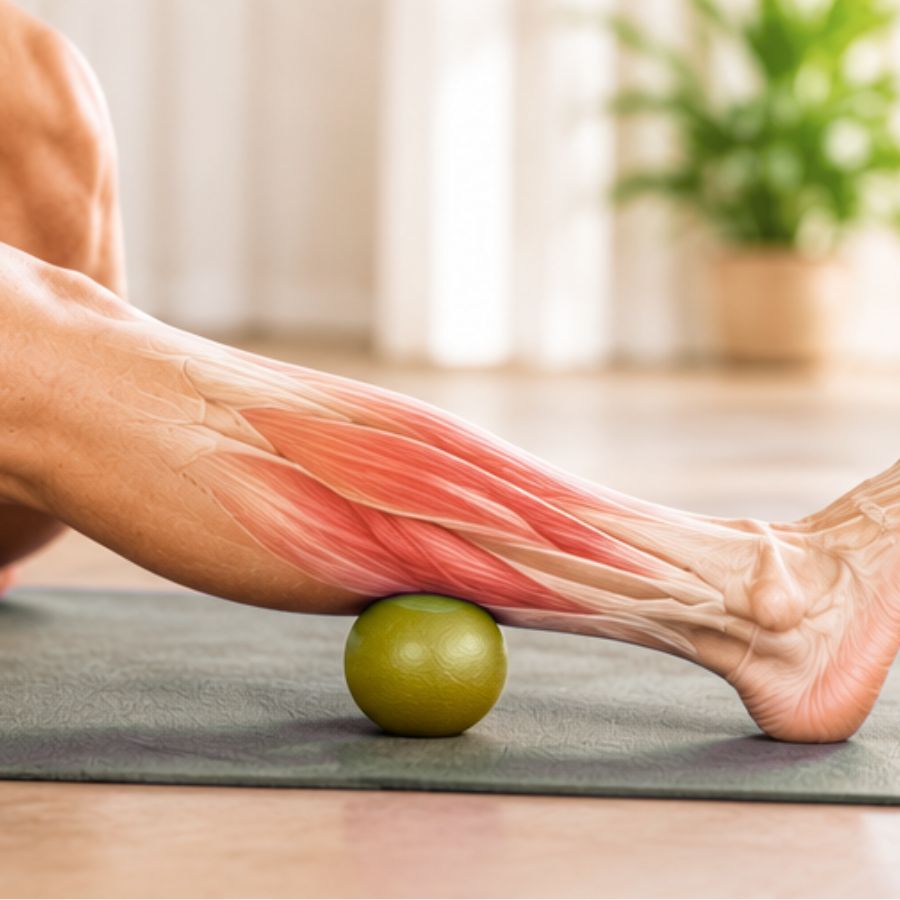
Pro tip: The balls are NOT an invitation to press as hard as possible, and the “no pain o gain” approach will only backfire when doing SMFR. You should be able to breathe and speak comfortably , and back off if you feel yourself bracing against the pressure. We work sensitively with soft tissue, never directly into a painful joint or the back of the knee. Sharp, electrical, or worsening pain is a reason to move to a new location.
Move, listen, release, retest
I start with a series of movement tests, combining what I can see with what you tell me.
Where do you feel the restriction? When does the pain increase? When does it ease?
We work with the area that needs attention, then repeat the movement.
Can you move more freely? Has the knee pain changed?
Often, once one restriction eases, you become aware of another tight area. We work there, then retest again. Sometimes that’s enough to bring substantial relief.
That’s why your feedback matters so much. I’m not taking everyone through the same sequence. We’re using what changes to help us decide what to do next.
The runner left with more than a better-feeling knee. He knew which areas needed regular attention through SMFR and stretching to help him keep running.
Once movement improves, strength matters
Strong AND long. That’s what I want for everyone: muscles that have the mobility to let us move freely and the strength to support us as we do.
When tightness is limiting movement, I tend to work in this order: create space by working on the restricted muscles, then strengthen what needs support. If you already have plenty of flexibility, the work may focus more on strength and stability.
Once you can move more comfortably, can you control that movement?
Can your hips provide steady support? Can your feet maintain good contact with the floor? Can you squat, step, or lunge without the leg collapsing inward or twisting excessively?
This is where strengthening into proper alignment becomes important. We want to use the movement we’ve regained, not just stretch forever.
Mobility and strength belong together. That combination helps us keep running, playing our favorite sports, and moving well as we get older.
When the knee needs medical attention
Let me be clear: targeted stretching and strengthening can’t fix everything.
That’s why I often refer people to doctors I trust for a thorough assessment, imaging when appropriate, and an expert opinion. I value doctors who carefully explore appropriate nonsurgical options before recommending surgery. Meniscus and ligament injuries, arthritis, and other conditions may need clinical care.
If you’re reading this after an injury and you have severe pain, substantial swelling, an inability to bear weight, or a knee that locks or gives way, seek prompt medical assessment. A hot, red, swollen knee with fever needs urgent assessment. Persistent or worsening symptoms also deserve evaluation.
What working together looks like
I help people understand what their bodies are telling them and learn practical ways to respond.
In movement sessions, we look at how you move, work with the areas that need attention, and retest to see what changes. In health coaching, we explore how to turn those discoveries into habits that fit your life.
For some people, an Initial Consultation provides meaningful relief or a clearer next step. Others benefit from ongoing support as we adjust their practices, notice patterns, and build consistency.
If knee pain is limiting what you feel able to do, we can start by looking at the bigger picture together.
Further Reading
Explaining Fascia, Myofascia, and Self-Myofascial Release
Constructive Versus Destructive Pain
Frozen Shoulder: Causes and a Whole-Body Approach to Relief
Author